
Introduction
Learning how to get rid of ants effectively requires more than killing visible insects on a countertop. Ant infestations are driven by food access, moisture, shelter, and highly organized colony behavior. When elimination methods fail to address trails, nests, and entry points, ants return repeatedly. This guide delivers a complete, science-backed, and home-safe approach to ant control, combining natural solutions, targeted baiting, prevention strategies, and long-term maintenance for indoor and outdoor environments.
Understand What Attracts Ants Into Your Home
Ants enter homes to satisfy survival needs such as food, water, and nesting shelter. Sugary spills, grease residue, pet food, standing water, and poorly sealed trash create reliable food pathways that ants exploit. Even microscopic crumbs sustain foraging ants, making kitchens and pantries the highest-risk zones.
Beyond food, ants are drawn to moisture sources like leaking pipes, damp wood, condensation, and plant soil. Structural gaps around windows, doors, and foundations allow easy access. Homes with inconsistent cleaning routines or unsealed building envelopes experience repeated invasions regardless of treatment method.
Environmental pressure also plays a role. Seasonal heat, rainfall, drought, and colony expansion push ants indoors. Understanding attraction factors allows you to remove incentives before applying any control solution.
Eliminate the Reason Ants Return After You Kill Them
Killing individual ants does not disrupt the colony. Worker ants represent a small fraction of the population, while queens and brood remain protected inside nests. When workers die, pheromone trails persist, signaling other ants to continue foraging.
Ants communicate using chemical scent trails that remain active even after cleaning with water alone. Without neutralizing these trails, ants repeatedly follow the same paths. This explains why infestations appear endless despite frequent spraying or wiping.
True elimination requires removing the colony’s food signal, destroying scent trails, and targeting the queen through baiting or nest treatment. Without these steps, ant populations regenerate rapidly.
Learn How Ants Communicate and Find Food
Ants rely on pheromones to coordinate movement, food retrieval, and colony defense. A single scout ant locates food and lays a chemical trail back to the nest. Other workers follow the trail precisely, reinforcing it with additional pheromones.
These scent trails adhere to surfaces such as countertops, baseboards, electrical cords, and wall edges. Traditional cleaners may not break down pheromone compounds, allowing trails to remain active.
Disrupting communication is critical. Acidic solutions like vinegar or enzymatic cleaners chemically alter pheromones, preventing ants from navigating successfully. Breaking communication collapses the infestation’s operational system.
Different ant species require different elimination strategies. Misidentification leads to ineffective treatment and recurring infestations. Visual size, color, behavior, and nesting location provide accurate identification signals.
Sugar ants target sweets and carbohydrates and typically nest outdoors. Carpenter ants are larger, prefer moist wood, and excavate tunnels that weaken structures. Fire ants build visible outdoor mounds and deliver painful stings. Odorous house ants release a rotten coconut smell when crushed.
Correct identification determines bait selection, placement strategy, and whether structural repairs are necessary. Species-specific targeting dramatically improves success rates.
Distinguish Sugar Ants From Carpenter Ants
Sugar ants are small, fast-moving, and commonly appear in kitchens. They seek syrups, fruit, bread, and residues. Carpenter ants are larger, slower, and often appear near windows, basements, or damp wood.
Carpenter ants do not eat wood but excavate it to build nests, causing long-term structural damage. Sugar ants do not damage structures but form large colonies that reappear quickly.
If ants are found near wood shavings, hollow sounds in beams, or moisture-damaged areas, carpenter ants are likely present and require deeper intervention.
Ant trails appear as consistent lines of movement along edges and corners. Follow trails backward to locate entry points such as wall gaps, window seams, or foundation cracks.
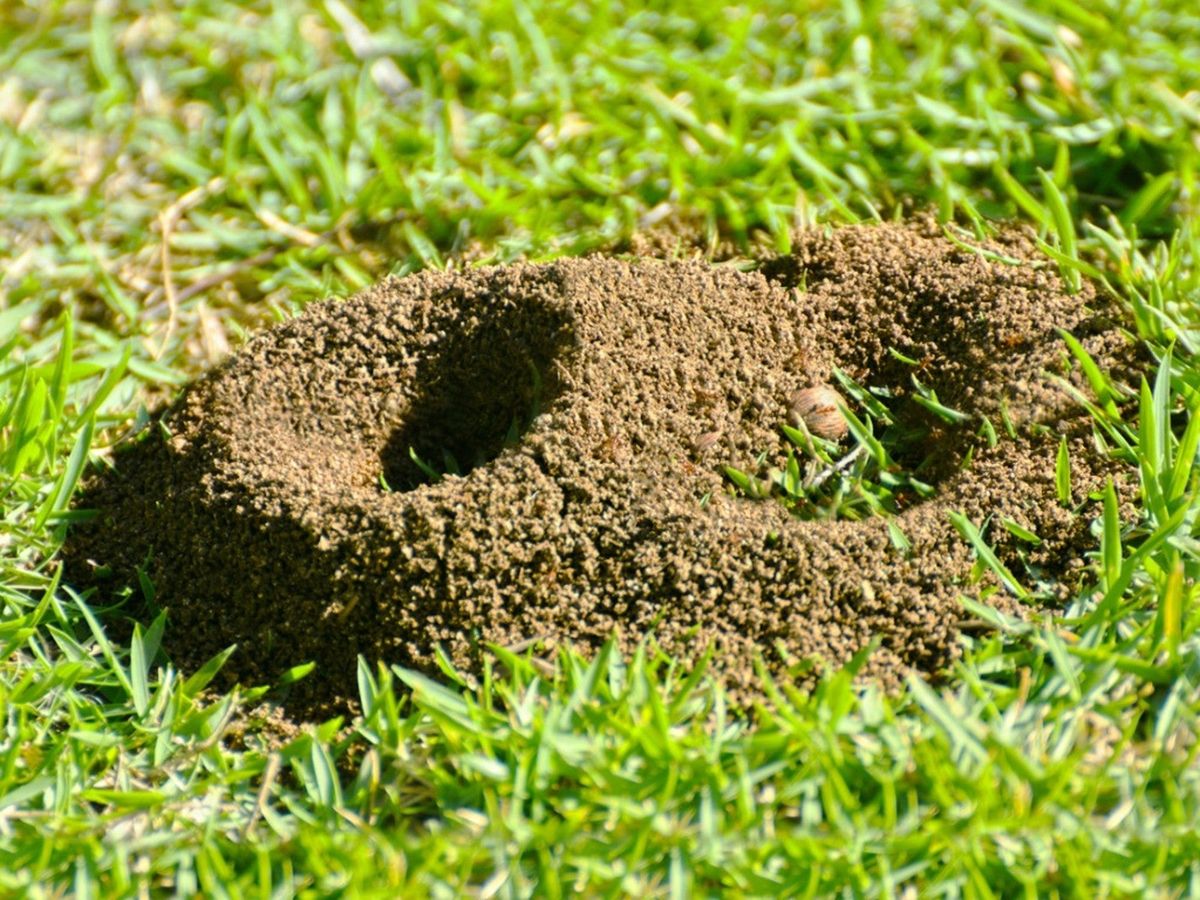
Outdoor nests may appear as soil mounds, pavement cracks, or under stones and plants. Indoor nests are often hidden in walls, insulation, or damp wood.
Accurate nest identification allows targeted treatment, reducing reliance on repeated surface control and preventing colony relocation.
Apply Natural Methods to Get Rid of Ants Without Chemicals

Natural ant control focuses on repellents, deterrents, and environmental disruption. These methods are safe for children, pets, and sensitive households.
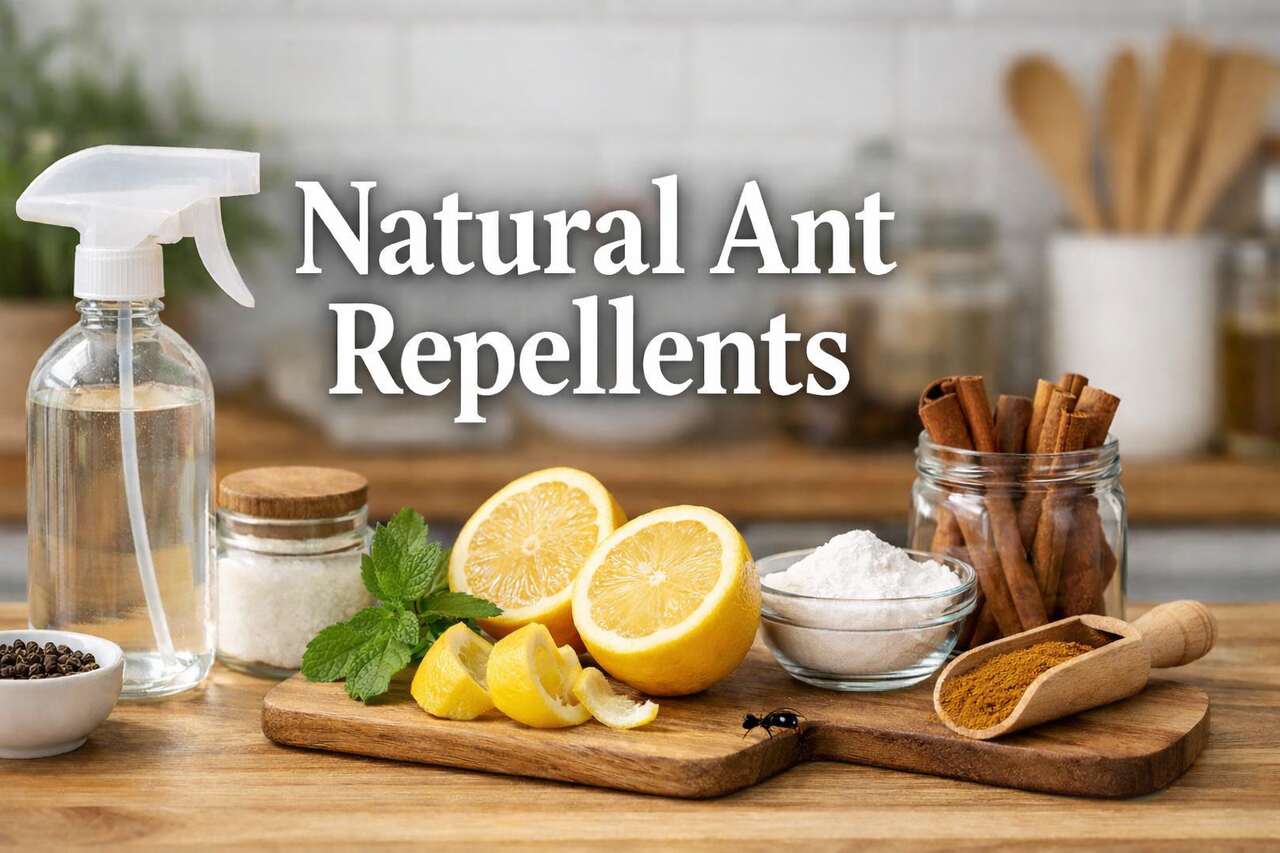
Vinegar disrupts pheromone trails and deters foraging ants. Lemon juice alters surface pH, confusing navigation. Cinnamon, cloves, and cayenne act as barrier repellents. Diatomaceous earth damages ant exoskeletons through dehydration.
Natural solutions work best when combined with sanitation and entry point sealing. Alone, they reduce activity but may not eliminate colonies entirely.
Use Vinegar, Lemon, Cinnamon, and Essential Oils Correctly
White vinegar diluted 1:1 with water removes scent trails and repels ants on contact. Lemon juice provides similar trail disruption while leaving a pleasant scent.
Essential oils such as peppermint, tea tree, eucalyptus, and clove interfere with ant sensory systems. Cinnamon powder blocks entry points effectively when applied dry.
Application consistency matters. Reapply after cleaning, rainfall, or heavy traffic to maintain effectiveness.

Prepare DIY Ant Deterrent Sprays Safely
DIY sprays combine water, vinegar, and essential oils for daily maintenance. A standard formula includes water, vinegar, and 10 to 15 drops of essential oil per cup.
Sprays should target trails, entry points, and high-traffic areas. Avoid porous wood surfaces when using acidic solutions.
DIY deterrents are preventive tools, not colony killers. Pair them with baiting when infestations persist.
Eliminate Ants Using Baits and Traps Effectively
Baits are the most reliable method for colony elimination. Worker ants carry bait back to the nest, feeding queens and larvae. This disrupts reproduction and collapses the colony.
Slow-acting baits outperform sprays because they allow transfer within the colony. Sugar-based baits target sweet-feeding ants, while protein-based baits target grease-feeding species.
Commercial baits often use borax or low-toxicity insect growth regulators. When used correctly, they provide complete elimination with minimal exposure risk.
Understand How Ant Baits Work
Baits rely on delayed toxicity. Ants consume the bait without immediate death, allowing time to distribute it throughout the colony.
Placing bait directly on active trails increases uptake. Removing other food sources ensures bait remains the primary option.
Avoid spraying near bait stations, as repellents deter ants from consuming bait.
Place Ant Traps in Strategic Locations
Place traps along trails, near entry points, under sinks, behind appliances, and near baseboards. Outdoor traps should be placed near nests but away from direct rain.
Leave baits undisturbed for at least 7 to 14 days. Increased ant activity initially indicates successful bait transfer.
Consistency and patience are essential. Removing bait too early interrupts colony collapse.
Seal Ant Entry Points Around the House
Physical exclusion prevents reinfestation. Seal cracks using silicone caulk, repair damaged weather stripping, and install door sweeps.
Window frames, utility penetrations, and foundation gaps are high-risk areas. Regular inspection reduces seasonal invasions.
Barrier methods work best after active infestations are eliminated.
Treat Outdoor Ant Colonies Safely
Outdoor colonies should be treated directly to prevent indoor migration. Boiling water kills surface colonies instantly but may not reach queens.
Bait granules applied around nests provide longer-lasting control. Natural options include diatomaceous earth and nematodes.
Fire ant mounds require specialized treatment due to aggressive behavior and deep nests.
Prevention depends on consistent sanitation, moisture control, and structural maintenance. Clean food surfaces daily, store food in sealed containers, and fix leaks promptly.
Outdoor vegetation should be trimmed away from structures. Trash bins should remain sealed and cleaned regularly.
Long-term success comes from combining exclusion, deterrence, and monitoring rather than repeated extermination.
Maintain a Kitchen That Permanently Repels Ants
Wipe counters nightly, vacuum crumbs, and rinse recyclables. Use vinegar or citrus-based cleaners regularly.
Pet food should be served at set times and removed afterward. Dry sinks and drains overnight.
A disciplined kitchen routine removes the primary motivation for indoor ant foraging.
Follow Safe Ant Control Practices for Pets and Children
Natural repellents and enclosed bait stations offer the safest solutions. Avoid aerosol sprays and loose powders in accessible areas.
According to guidance from the Environmental Protection Agency, integrated pest management minimizes risk while maximizing control effectiveness.
When uncertainty exists, consult licensed professionals who use targeted, low-toxicity methods.
Know When Professional Pest Control Is Necessary
Professional intervention is recommended for carpenter ants, structural damage, fire ant infestations, or recurring colonies resistant to home treatment.
Licensed technicians identify nests, species, and environmental factors that homeowners may miss. Long-term monitoring programs prevent recurrence.
Professional treatment should complement, not replace, sanitation and exclusion efforts.
Comparison of Natural vs Store-Bought Ant Solutions
| Method | Effectiveness | Safety | Best Use Case |
|---|---|---|---|
| Vinegar spray | Medium | Very high | Trail disruption |
| Essential oils | Medium | High | Entry point deterrence |
| Borax bait | High | Moderate | Colony elimination |
| Commercial bait | Very high | High | Persistent infestations |
| Aerosol sprays | Low | Low | Temporary knockdown |
Ant Prevention Checklist
| Area | Action |
|---|---|
| Kitchen | Clean nightly |
| Entry points | Seal cracks |
| Moisture | Fix leaks |
| Storage | Use sealed containers |
| Yard | Treat nests |
Conclusion
Successfully learning how to get rid of ants requires understanding ant behavior, disrupting communication, eliminating colonies, and preventing re-entry. Natural deterrents, targeted baiting, and structural maintenance work together to deliver lasting control. When applied consistently, these strategies eliminate infestations without unnecessary chemical exposure and keep homes ant-free year-round.
FAQs
What is the fastest way to get rid of ants in the kitchen?
Remove food sources, wipe trails with vinegar, and place bait along active trails.
Can ants bite and are some species dangerous?
Fire ants bite and sting aggressively. Most household ants are harmless.
Do essential oils really keep ants away?
Yes, peppermint and clove oils disrupt navigation but work best as part of a broader plan.
Is borax safe to use around pets?
Borax should be enclosed in bait stations and kept out of reach.
Why do ants return after cleaning?
Pheromone trails remain unless chemically neutralized.
How long should ant baits be left out?
At least 7 to 14 days for full colony transfer.
Can ants damage my house structure?
Carpenter ants can weaken wood over time.
What time of year are ants most active?
Spring and summer, when colonies expand and forage heavily.
Read Next: Housewarming Gifts That Create Meaningful First Memories in a New Home
