
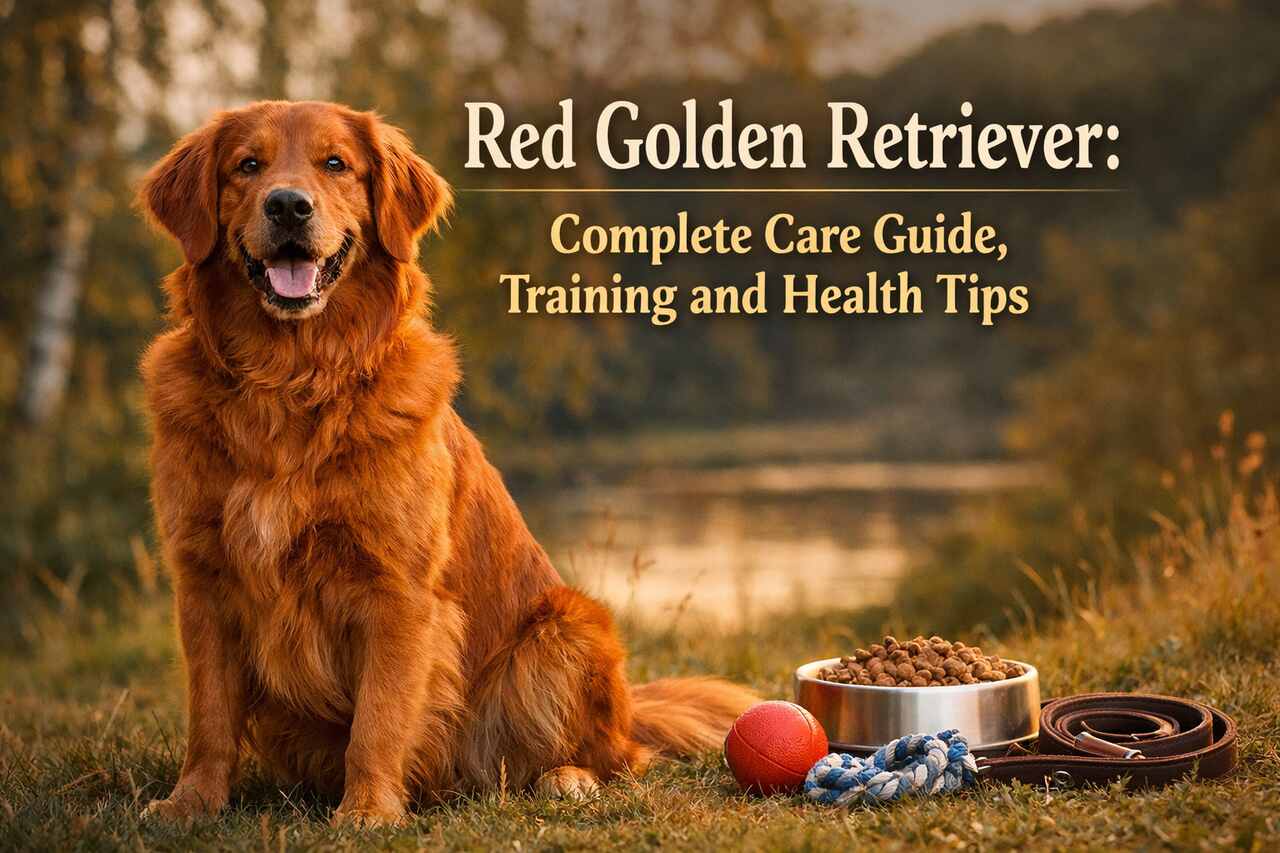
A red golden retriever stands out for its rich mahogany or deep copper coat, athletic build, and warm, loyal temperament. Many people discover this variation while searching for a family-friendly dog that is both beautiful and dependable. The interest is understandable. This dog combines the familiar kindness of the golden retriever with a darker coat color that often gives it a more striking, fox-red appearance.
Choosing, raising, and caring for a red golden retriever involves more than admiring its color. Coat type, energy level, grooming demands, training response, diet, and long-term health all shape the experience of ownership. A prospective owner needs practical guidance on how this dog behaves, how it differs in appearance from lighter goldens, and how to support a healthy life from puppyhood to senior years. This guide covers the essential details in a step-by-step format so readers can make informed decisions and care for the breed with confidence.
Identify the Red Golden Retriever’s Key Traits
A red golden retriever is a golden retriever with a darker coat that falls within the accepted color range of the breed in many lines, although the exact shade can vary from medium gold to deep red. The dog usually keeps the hallmark personality of the breed: affectionate, intelligent, eager to please, and highly social. Most red goldens are friendly with children, gentle with familiar people, and capable of becoming excellent family companions.
The coat shade often draws the most attention, but color alone does not define the dog’s overall quality. Build, head shape, feathering, movement, and temperament remain more important than coat depth. Some red golden retrievers have a leaner field-line appearance, while others come from lines with a fuller coat and broader frame. Their ears remain medium-sized and pendant, their eyes typically carry a soft and alert expression, and their tail shows the cheerful movement associated with the breed.
Daily life with this dog tends to be active and people-centered. A red golden retriever usually wants to join walks, play sessions, training exercises, and family routines. Owners who expect a quiet dog that entertains itself for hours may find the breed more demanding than expected. Owners who want a responsive, trainable companion often find the red golden retriever exceptionally rewarding.
Distinguish the Red Coat from Standard Golden Shades
The red coat appears deeper and more saturated than the pale cream or standard gold seen in many golden retrievers. In natural light, the fur may look copper, rust-toned, or dark honey. The ears and back often show the richest color, while feathering on the chest, tail, and legs can appear slightly lighter or softer in tone. Puppies may also change shade as they mature, so coat depth at eight weeks does not always predict the exact adult color.
Color differences do not automatically indicate major differences in temperament or health. A red golden retriever is not a separate breed, and it is not a different species of retriever. It is still a golden retriever with a specific coat presentation. Some owners mistakenly assume that a darker coat means the dog will be more aggressive, more energetic, or more rare in every case. In reality, breeding line, genetics, socialization, and daily care matter far more than color.
That said, darker-coated goldens are often associated with working or field lines in some regions. Field-bred golden retrievers may have less coat feathering, a more athletic frame, and high drive for retrieving, running, and training tasks. This association is not universal, but it helps explain why some red golden retrievers appear slimmer and more intense than heavily coated show-line goldens.
Compare Red Golden Retrievers with Other Golden Retriever Types
A red golden retriever shares the same breed foundation as cream, light gold, and standard gold golden retrievers, but visible and practical differences can appear depending on breeding goals. Many red goldens have a more streamlined body, lighter feathering, and a stronger emphasis on stamina and work ethic. Cream or lighter show-line goldens may look stockier, carry heavier coats, and present a calmer posture, though personality varies from dog to dog.
The first important comparison involves coat and grooming. A heavy-coated show-line golden often needs more brushing to manage feathering, matting, and loose fur. A red golden retriever from active field lines may still shed significantly, but the coat can be less dense and easier to maintain. The second comparison involves energy. Many red goldens need vigorous exercise and more structured activity, especially if their line emphasizes retrieving ability.
The final comparison involves owner expectations. Families seeking a jogging partner, sports prospect, or highly trainable outdoor companion may gravitate toward red goldens. Families focused on a lower-intensity household pet may prefer a calmer individual from a different line. The deciding factor should not be color alone. Responsible matching depends on temperament, parents, activity level, and the lifestyle of the home.
| Feature | Red Golden Retriever | Lighter or Show-Line Golden Retriever |
|---|---|---|
| Coat shade | Deep gold to red | Cream to medium gold |
| Build | Often leaner and more athletic | Often broader and heavier |
| Feathering | May be lighter | Often fuller and longer |
| Energy level | Frequently high | Moderate to high |
| Common role | Active family dog, sport, field work | Family companion, conformation, therapy |
| Grooming load | Moderate to high | High |
Choose a Red Golden Retriever from a Responsible Source
A healthy start begins with the source. A responsible breeder screens parent dogs, documents health testing, raises puppies in clean conditions, and pays close attention to temperament. The breeder should discuss hips, elbows, heart, eyes, and family health history openly. They should also ask questions about your lifestyle, home environment, and goals. A thoughtful breeder protects the breed and tries to place each puppy in the right household.
A buyer should look beyond coat color marketing. Terms such as “rare red” or “exclusive fox red” can be used to inflate price without proving quality. Good breeders explain lineage, socialization, feeding, early handling, and veterinary care. They do not rely only on color as the selling point. They provide contracts, vaccination records, deworming details, and guidance for the transition home. Rescue groups can also be excellent sources for adult golden retrievers or golden mixes with reddish coats.
A strong decision balances appearance with long-term suitability. The puppy that catches the eye is not always the best match for the home. Temperament, resilience, curiosity, confidence, and sociability deserve careful attention. For many households, an adult dog from rescue may also be easier to assess because personality, energy level, and coat color are already established.
Prepare Your Home for a Red Golden Retriever Puppy
A red golden retriever puppy needs structure from the first day. Before bringing one home, set up a crate, bedding, food and water bowls, chew toys, grooming supplies, a collar, identification tags, and baby gates if needed. Keep electrical cords, shoes, cleaning products, and small swallowable objects out of reach. Puppies explore with their mouths, and prevention reduces stress for both dog and owner.
The next step involves planning routines. Feeding times, potty breaks, nap periods, play sessions, and short training moments should happen consistently. Golden retriever puppies thrive when the home gives clear patterns. They learn house rules more quickly when expectations remain stable. A designated sleeping area and a designated potty spot can speed up adjustment and reduce accidents.
Household members should also agree on commands, boundaries, and rewards. A puppy becomes confused when one person allows jumping on the couch while another corrects it. Early consistency shapes adult behavior. The effort invested in the first weeks often determines whether the dog grows into a calm companion or a restless, overstimulated adolescent.
Feed a Red Golden Retriever for Healthy Growth and Energy
A red golden retriever needs a balanced diet that supports growth, muscle development, coat condition, digestion, and joint health. Puppies require food formulated for large-breed growth to help regulate development and reduce the risk of skeletal stress. Adults benefit from a high-quality diet with appropriate protein, controlled calories, and nutrients that maintain lean body condition. Overfeeding is common in goldens because they are food-motivated and often appear eager for more.
Portion control matters as much as ingredient quality. A dog that carries excess weight puts added strain on hips, elbows, and the cardiovascular system. Measured meals work better than free feeding in most homes. Treats should support training without becoming a major calorie source. Owners should also watch for digestive sensitivity, itching, ear irritation, or stool changes that could signal an ingredient issue.
Hydration, activity level, and life stage all influence feeding needs. A growing puppy, a highly active young adult, and a senior dog have different nutritional demands. Veterinary guidance helps refine the diet, especially for dogs with allergies, orthopedic concerns, or body condition challenges. A healthy red golden retriever usually shows a glossy coat, consistent energy, firm stool, and a visible waistline when viewed from above.
| Life Stage | Feeding Focus | Main Goal | Common Owner Mistake |
|---|---|---|---|
| Puppy | Large-breed puppy formula | Controlled growth and strong development | Overfeeding for faster growth |
| Young adult | Balanced protein and calories | Muscle maintenance and stable energy | Too many treats |
| Active adult | Performance-supportive nutrition | Endurance and recovery | Ignoring calorie needs |
| Senior | Joint support and weight control | Mobility and healthy aging | Maintaining old portion sizes |
Train a Red Golden Retriever with Structure and Repetition
A red golden retriever usually responds extremely well to training because the breed tends to be intelligent, people-oriented, and reward-driven. Basic obedience should begin early with name recognition, recall, sit, down, stay, loose-leash walking, and polite greetings. Short, frequent sessions produce better results than long, repetitive drills. Puppies and adolescents learn best when training feels clear, rewarding, and predictable.
Positive reinforcement builds trust and enthusiasm. Food rewards, praise, toys, and play can all reinforce correct choices. Harsh corrections often reduce confidence and can create confusion in a sensitive dog. Because many red golden retrievers come from active lines, they often enjoy task-based learning such as retrieve games, scent games, agility foundations, and place training. Mental work can reduce boredom and improve behavior throughout the home.
Training should also cover practical life skills. A well-mannered golden retriever knows how to settle indoors, wait at doors, ride calmly in the car, accept grooming, and greet strangers without excessive jumping. These behaviors do not appear automatically. They develop through repetition in real environments. Owners who train only formal cues and ignore daily manners often end up with a friendly but unruly dog.
Socialize a Red Golden Retriever Through Real-World Exposure
A red golden retriever benefits from thoughtful socialization during puppyhood and adolescence. The goal is not simply to let the dog meet as many people and dogs as possible. The goal is to build calm confidence across different sights, surfaces, sounds, handling experiences, and public settings. A dog that learns to recover quickly from novelty becomes easier to live with and more stable in adulthood.
Good socialization includes exposure to friendly adults, supervised children, stable vaccinated dogs, grooming tools, car rides, veterinary handling, city sounds, household noises, and different walking environments. Each experience should be safe and manageable. Overwhelming a puppy with chaotic crowds or rough dog interactions can create fear instead of confidence. Owners should watch body language carefully and support the dog through gradual progress.
This stage has long-term effects on behavior. A red golden retriever that learns patience and confidence early is more likely to handle travel, guests, parks, and family events smoothly. Socialization also supports future roles such as therapy visits, sport participation, and reliable companionship in busy households. Exposure matters, but the quality and emotional tone of exposure matter even more.
Exercise a Red Golden Retriever to Prevent Boredom and Destructive Behavior
A red golden retriever usually needs significant daily exercise. Walks alone may not be enough, especially for younger dogs with strong retrieving instincts and high stamina. A healthy adult often benefits from a mix of brisk walks, fetch sessions, structured training, hiking, swimming, scent work, and free movement in safe areas. Physical activity helps maintain muscle tone, body weight, and emotional balance.
Exercise needs should match age and development. Puppies require short, controlled play rather than intense repetitive impact. Adolescents often show bursts of energy and need outlets that combine physical and mental work. Adults from field-oriented lines may demand more than the average family expects. Without enough activity, a red golden retriever may bark excessively, chew furniture, raid counters, pace indoors, or invent attention-seeking habits.
Balance is important. An owner can accidentally create a canine athlete with endless stamina by escalating activity too quickly without also teaching rest. The best routine pairs exercise with impulse control and relaxation training. A dog should learn both how to work and how to switch off. That balance produces a companion that is energetic outdoors yet manageable inside the home.
Groom a Red Golden Retriever to Protect the Coat and Skin
A red golden retriever needs regular grooming to control shedding, remove debris, prevent mats, and keep the skin healthy. Brushing several times a week is usually necessary, and daily brushing may be useful during seasonal coat blowouts. A slicker brush, undercoat tool, comb, nail trimmer, dog-safe shampoo, and ear-cleaning supplies form the basic grooming kit. Routine care keeps the coat functional and reduces loose fur around the house.
Attention should focus on feathering behind the ears, under the legs, around the tail, and along the chest. These areas can mat, especially after swimming or outdoor activity. Baths should be given as needed rather than too frequently, since excessive washing can dry the skin. Nails should stay trimmed to support healthy movement. Ears deserve regular checks because golden retrievers can be prone to moisture buildup and irritation, particularly after swimming.
Grooming also serves as an inspection routine. Owners can spot lumps, hot spots, parasites, scratches, skin redness, or coat thinning early when they handle the dog regularly. For a red golden retriever, the darker coat can look dramatic and luxurious, but it still depends on basic maintenance. A healthy coat reflects not just genetics, but also diet, hygiene, and overall care.
Monitor Common Health Concerns Throughout Every Life Stage
A red golden retriever can be a robust and joyful companion, but the breed is associated with several health concerns that require attention. Hip dysplasia, elbow dysplasia, heart conditions, eye disorders, skin issues, ear infections, obesity, and certain cancers are important considerations. Early screening, responsible breeding, and regular veterinary visits improve the odds of detecting problems before they become severe.
Preventive care starts with the parents and continues throughout the dog’s life. Health-tested breeding stock reduces risk but does not eliminate it. Puppies need vaccine schedules, parasite prevention, and growth monitoring. Adults need routine exams, dental care, weight checks, and evaluation of mobility and skin condition. Seniors may need bloodwork, arthritis support, and more frequent checkups as age-related changes emerge.
Owners should pay attention to changes in appetite, energy, gait, breathing, bathroom habits, and behavior. A golden retriever often hides discomfort well because the breed tends to remain cheerful and engaged. Subtle signs may be the first warning. Timely veterinary care protects both quality of life and long-term outcomes.
Support Joint Health and Weight Management from Puppyhood
Joint health deserves special attention in a red golden retriever because the breed can be vulnerable to orthopedic stress. Growth should be steady rather than rapid, exercise should be age-appropriate, and flooring should provide traction when possible. Slippery surfaces can contribute to awkward movement and strain in a young dog still developing coordination. Large jumps and repetitive impact should be limited during the growth phase.
Lean body condition is one of the strongest protections for the joints. Excess fat increases mechanical load and inflammation, which can worsen discomfort over time. Owners sometimes interpret a rounded body as healthy or cute, especially in fluffy-coated dogs. In reality, a visible waist and palpable ribs under light covering usually indicate better condition than a heavy outline hidden under fur.
Joint support may also involve supplements, physical therapy, controlled conditioning, and veterinary treatment when needed. Swimming, balanced muscle development, and careful warm-up before strenuous activity can all help active dogs. A red golden retriever that stays lean and conditioned often enjoys better mobility into the senior years.
Build a Family Routine That Matches the Breed’s Temperament
A red golden retriever thrives in a home where it can participate in daily life. This breed tends to bond strongly with people and often dislikes extended isolation. Families that include the dog in walks, games, travel, and quiet indoor time usually see the best behavior. Regular interaction satisfies the dog’s social drive and reduces attention-seeking problems.
Children should learn respectful interaction, and adults should supervise play. Golden retrievers are generally gentle, but any dog can become overwhelmed by rough handling, cornering, or chaotic movement. The dog should have a quiet rest area where it can withdraw undisturbed. Teaching both children and dog how to interact safely builds trust and prevents avoidable stress.
Household routine also affects emotional stability. Predictable meals, exercise, rest, and training help the dog settle. Sudden changes, understimulation, or inconsistent boundaries can produce anxiety or unruly behavior. A red golden retriever usually gives a family enormous affection and enthusiasm, but that devotion comes with a need for structure, time, and engagement.
Plan for Puppy, Adult, and Senior Care Changes
A red golden retriever changes significantly across life stages, and care should evolve with those changes. Puppies need house training, teething support, socialization, vaccination schedules, and controlled growth. Adolescents need patience, consistent training, and outlets for rising energy. Adults need sustained exercise, grooming, preventive care, and mental engagement. Seniors need comfort, mobility support, and closer monitoring for subtle health changes.
Each stage introduces different priorities. A puppy may chew everything and need frequent potty breaks. A young adult may test boundaries and require advanced training. A mature adult often becomes a stable companion with dependable habits. A senior may slow down physically while still craving interaction and routine. Owners who adjust expectations at each stage usually maintain a stronger relationship and catch problems sooner.
Planning ahead also makes ownership more sustainable. Budgeting for food, grooming, routine veterinary care, training, emergency expenses, and age-related treatment prevents future strain. The red golden retriever is not just a beautiful puppy phase. It is a long-term commitment that rewards thoughtful preparation.
Decide Whether a Red Golden Retriever Fits Your Lifestyle
A red golden retriever fits best with owners who want an engaged, affectionate, trainable, and active companion. This dog often excels in homes that value outdoor activity, family participation, and consistent interaction. It can do well with children, other dogs, and visitors when trained and socialized properly. Owners who enjoy walking, hiking, fetch, obedience work, or canine sports often find the breed especially satisfying.
The breed may be less suitable for people who work very long hours away from home, dislike shedding, want minimal grooming, or prefer a highly independent dog. Golden retrievers need time, supervision, and companionship. Their friendliness and intelligence are strengths, but those strengths come with demands. Boredom, loneliness, and inactivity can turn a pleasant dog into a difficult one.
The best fit comes from honest self-assessment. Coat color should remain secondary to temperament, health, and lifestyle compatibility. A red golden retriever can be an exceptional dog in the right home, but success depends on daily care more than visual appeal. Owners who meet the breed’s needs usually receive devotion, trainability, and joyful companionship in return.
Conclusion
A red golden retriever offers the same beloved foundation that makes golden retrievers so popular: loyalty, friendliness, intelligence, and eagerness to be part of family life. Its darker coat adds visual distinction, but lasting satisfaction comes from understanding the full picture. Exercise, training, nutrition, grooming, socialization, and preventive health care all matter far more than color alone.
For the right owner, this dog can be an outstanding companion for family routines, outdoor adventures, and everyday affection. Choosing carefully, building structure early, and supporting the dog through every life stage will make the greatest difference. When raised with consistency and cared for responsibly, a red golden retriever grows into far more than a beautiful pet. It becomes a steady, loving presence in the home.
FAQs
Is a red golden retriever a separate breed?
No. A red golden retriever is still a golden retriever. The term refers to a darker coat shade, not a separate breed.
Are red golden retrievers more expensive?
Sometimes they are priced higher because of demand for the darker coat. Price should not be based on color alone. Health testing, breeder quality, and temperament matter more.
Do red golden retrievers shed less?
Not necessarily. Some have lighter feathering and may be easier to maintain, but they still shed regularly like other golden retrievers.
Are red golden retrievers good family dogs?
Yes, many are excellent family dogs. They are typically affectionate, social, and trainable when exercised and supervised properly.
Do red golden retrievers need a lot of exercise?
Yes. Most need daily physical activity and mental stimulation. Many individuals, especially from active lines, require more than basic walks.
How long does a red golden retriever live?
Many live around 10 to 12 years, though lifespan varies based on genetics, health care, weight management, and overall lifestyle.
