
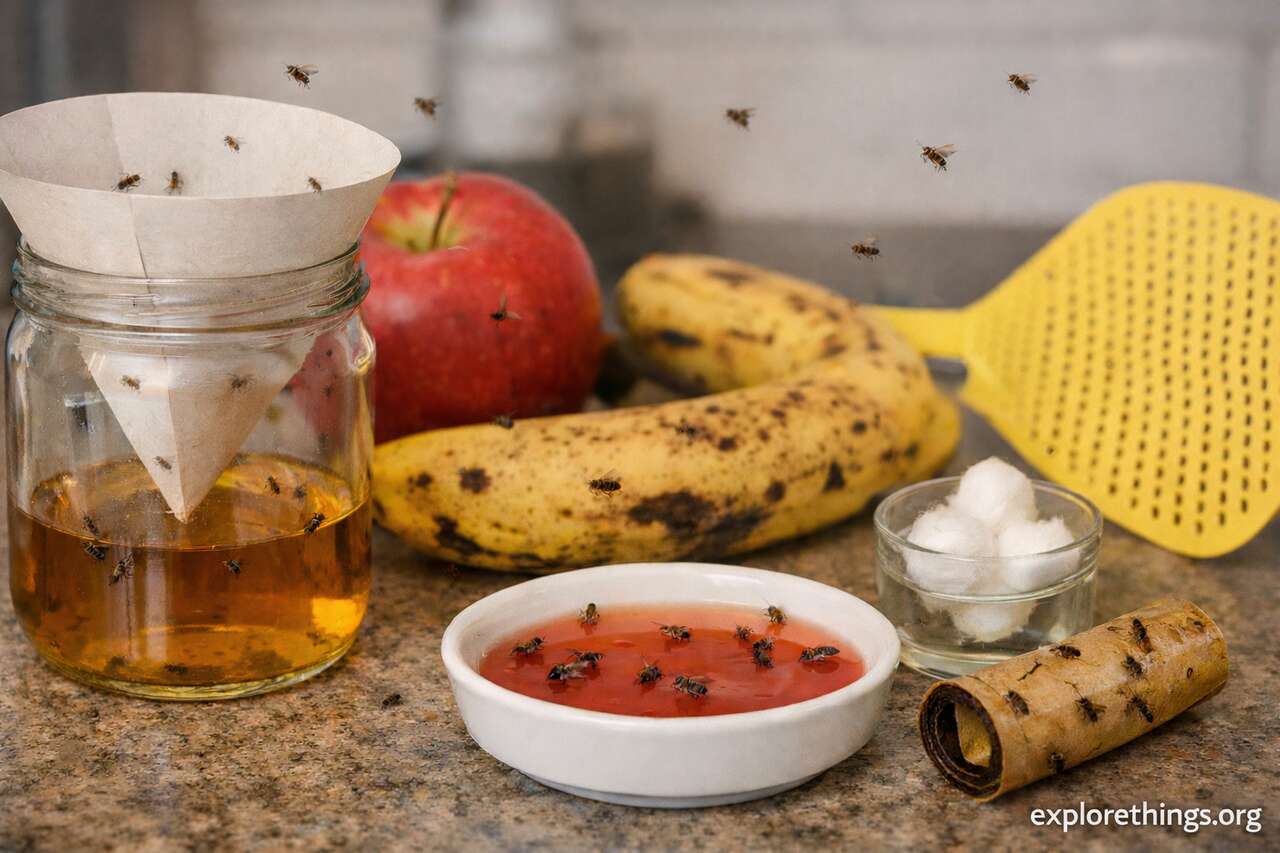
Fruit flies can appear almost overnight in kitchens, trash areas, and around ripe produce. These tiny insects multiply quickly and can become a frustrating household problem if not handled properly. Learning how to get rid of fruit flies involves identifying their breeding sources, removing attractants, and applying targeted control methods that stop their life cycle.
Fruit flies are strongly attracted to fermenting foods such as bananas, apples, tomatoes, and other produce. When these foods sit out or begin to decay, fruit flies lay eggs on their surface. Within days, larvae hatch and mature into adult flies, creating a rapid infestation. Effective removal requires addressing both adult flies and their breeding locations.
This guide provides a practical step-by-step process to eliminate fruit flies from your home and prevent them from returning.
Identify the Sources Attracting Fruit Flies
The first step in eliminating fruit flies is locating the areas where they are breeding and feeding. Fruit flies usually gather around ripening fruit, vegetable scraps, sugary liquids, and organic waste.
Common locations where fruit flies develop include kitchen counters, garbage bins, compost containers, recycling bins, drains, and forgotten produce in cabinets or refrigerators. Even small residues of juice or syrup can attract them.
Inspect all potential sources carefully. Overripe bananas, apples, tomatoes, potatoes, onions, and other produce can host eggs and larvae. Removing these items immediately reduces the population because fruit flies rely on these organic materials to reproduce.
Remove Overripe Produce and Food Waste
After identifying the sources, remove anything that may support fruit fly breeding. Discard overly ripe fruits, vegetables, and food scraps that have started fermenting.
Fresh produce should either be consumed quickly or stored properly in sealed containers or refrigerators. Keeping fruits such as apples, grapes, and berries refrigerated slows down fermentation and reduces their attractiveness to fruit flies.
Garbage containers should be emptied frequently. Trash bags that contain fruit peels, vegetable scraps, or sugary liquids become ideal breeding environments. Sealing waste properly eliminates many of the conditions fruit flies depend on.
Clean Kitchen Surfaces and Food Residue
Once food sources are removed, cleaning kitchen surfaces becomes essential. Fruit flies can survive on even small amounts of organic residue left on countertops, cutting boards, and appliances.
Use warm water combined with dish soap or household cleaners to wipe down surfaces thoroughly. Pay special attention to areas around fruit bowls, blender bases, coffee machines, and stovetops where sticky spills often occur.
Cleaning also includes wiping cabinet handles, backsplash areas, and floor surfaces near food preparation zones. Removing invisible residues prevents fruit flies from returning to those areas.
Sanitize Kitchen Drains and Garbage Disposals
Fruit flies frequently breed inside drains because food particles and moisture collect there. These damp environments allow larvae to develop unnoticed.
Pour boiling water down drains to loosen organic buildup. Afterward, apply a mixture of baking soda and vinegar to break down residue inside pipes. Allow the mixture to foam for several minutes before flushing with hot water.
Garbage disposals should also be cleaned regularly. Grinding ice cubes and citrus peels while running cold water helps remove accumulated debris and reduces odors that attract flies.
Use Homemade Fruit Fly Traps
Traps are one of the most effective ways to reduce adult fruit fly populations quickly. Homemade traps use attractive scents to lure flies into containers where they cannot escape.
A simple trap involves filling a small bowl with apple cider vinegar and adding a few drops of dish soap. The vinegar scent attracts flies while the soap reduces surface tension, causing them to sink.
Another method uses a jar covered with plastic wrap. Small holes in the wrap allow flies to enter but make it difficult for them to exit. Place traps near fruit bowls, trash bins, and sink areas for the best results.
Apply Natural Repellents to Deter Fruit Flies
Certain scents naturally discourage fruit flies from gathering in kitchens. Using these aromas can help reduce activity in problem areas.
Basil plants, mint leaves, lavender, and eucalyptus produce strong fragrances that fruit flies dislike. Placing these herbs near fruit storage areas or windows can discourage flies from settling.
Essential oils such as peppermint oil and lemongrass oil can also be diluted in water and sprayed lightly around counters or trash bins. While these solutions do not kill fruit flies directly, they help create an environment that is less attractive for them.
Use Store-Bought Fruit Fly Control Products
Commercial fruit fly traps and sprays provide additional control when infestations are large. These products are designed specifically to attract and capture fruit flies using food-based lures.
Many store traps use fermentation scents similar to those found in overripe fruit. Once flies enter the trap, sticky surfaces or liquid solutions prevent escape.
Insect growth regulators and targeted sprays may also help control larvae in drains or garbage areas. These products interrupt the fruit fly life cycle and prevent future generations from developing.
Maintain Proper Food Storage Practices
Preventing fruit flies requires consistent food storage habits. Fruits and vegetables should not remain exposed on counters for extended periods.
Use sealed containers or produce drawers inside the refrigerator. Storage bags and airtight containers limit odors that attract insects.
Keeping pantry items sealed is equally important. Open containers of sugar, flour, cereal, and dried fruit can attract flies when small residues accumulate nearby.
Improve Waste Management in the Kitchen
Kitchen waste management plays a major role in fruit fly prevention. Trash containers should include tight-fitting lids and liners that reduce odor leakage.
Organic waste should be disposed of daily, especially during warm weather when decomposition occurs faster. Compost bins should remain sealed and cleaned regularly.
Recycling containers also require attention. Rinse beverage cans, juice bottles, and food containers before placing them in recycling bins. Residual sugar and juice are common fruit fly attractants.
Monitor and Break the Fruit Fly Life Cycle
Fruit flies reproduce quickly. Their life cycle can complete in about a week under warm indoor conditions. Eggs hatch into larvae, larvae develop into pupae, and adults emerge soon afterward.
Breaking this cycle requires eliminating breeding sites before larvae mature. Cleaning, trapping, and removing attractants simultaneously ensures that new adults cannot replace those already captured.
Monitoring kitchen areas for several days after treatment helps confirm that the infestation has been controlled.
Fruit Fly Control Methods Comparison
| Method | Primary Purpose | Best Location | Effectiveness |
|---|---|---|---|
| Apple cider vinegar traps | Capture adult flies | Kitchen counters, fruit bowls | High |
| Drain cleaning | Remove larvae breeding areas | Kitchen sink drains | High |
| Removing overripe fruit | Eliminate egg laying sites | Countertops and pantry | Very High |
| Essential oil repellents | Reduce attraction | Food prep areas | Moderate |
| Commercial traps | Capture large numbers of flies | Near trash or sinks | High |
Common Fruit Fly Breeding Sources in Homes
| Breeding Source | Risk Level | Prevention Method |
|---|---|---|
| Overripe fruit | Very High | Refrigerate or consume quickly |
| Trash bins | High | Empty daily and seal lids |
| Kitchen drains | High | Clean with boiling water and vinegar |
| Compost containers | Medium | Keep sealed and wash regularly |
| Sticky spills | Medium | Clean surfaces immediately |
Conclusion
Getting rid of fruit flies requires a combination of removing food sources, cleaning breeding areas, and trapping adult insects. Because fruit flies reproduce rapidly, even small amounts of fermenting food can trigger infestations. By eliminating overripe produce, sanitizing kitchen drains, using vinegar traps, and improving food storage practices, households can effectively control fruit fly populations.
Long-term prevention relies on maintaining clean kitchen environments and managing organic waste properly. When these habits become routine, fruit flies lose access to the conditions they need to reproduce, allowing homes to remain free from recurring infestations.
FAQs
How long does it take to eliminate fruit flies?
Most infestations can be controlled within three to seven days if breeding sources are removed and traps are used consistently. Since fruit flies reproduce quickly, immediate action speeds up elimination.
Do fruit flies come from drains?
Yes, kitchen drains often contain food residue and moisture that support fruit fly larvae. Cleaning drains regularly helps remove these breeding environments.
Are fruit flies harmful to humans?
Fruit flies do not usually bite or transmit diseases to humans. However, they can contaminate food surfaces and create unsanitary kitchen conditions.
Does vinegar attract fruit flies?
Yes. Apple cider vinegar produces fermentation odors similar to rotting fruit, which strongly attracts fruit flies. This makes vinegar an effective ingredient for traps.
Can fruit flies survive in refrigerators?
Fruit flies prefer warm environments. Refrigeration slows their activity and reproduction, which is why storing fruit in the refrigerator helps prevent infestations.
Why do fruit flies suddenly appear in kitchens?
Fruit flies often enter homes on produce purchased from grocery stores. Once fruits begin to ripen or ferment, the flies quickly multiply and become noticeable.
Related Article:
How to Get Rid of Ants Without Chemicals Using Proven Home Solutions That Work
