
A car battery usually lasts three to five years, but that range depends heavily on climate, driving habits, battery type, and how well the charging system supports it. In cooler regions, some batteries can last five years or more, while in hotter climates, around three years is more typical because heat speeds up internal chemical wear.
That makes battery life less about a single number and more about conditions. A lightly used commuter car in a mild climate may go well past four years with no drama. A vehicle that sits often, takes repeated short trips, or lives in constant heat may need a replacement much sooner. This guide explains the realistic lifespan of a car battery, the factors that shorten it, the signs that it is nearing the end, and the maintenance steps that help you avoid an unexpected no-start situation.
Expect a Realistic Battery Lifespan for Your Driving Conditions
For most gasoline vehicles with a standard 12-volt battery, the practical expectation is three to five years. That is the range most automotive experts use, and it fits how lead-acid starting batteries age in normal service. Treat that range as a starting point, not a guarantee.
Your actual result depends on where and how you drive. A battery that stays close to full charge, gets regular highway-length trips, and avoids prolonged heat exposure can last longer than average. Some batteries even make it to ten years, but that tends to happen only when they avoid deep discharge, extended sitting, and repeated heat damage. That is the exception, not the planning baseline.
The most useful mindset is this: once your battery reaches about the fourth year, it deserves more attention, especially before summer road trips or winter starts. Proactive replacement around the fourth or fifth year can reduce the odds of a surprise breakdown.
Battery lifespan by situation
| Driving condition | Typical outcome |
|---|---|
| Mild climate, frequent driving, healthy charging system | Often closer to 4 to 5+ years |
| Hot climate, under-hood heat, daily exposure to high temperatures | Often closer to 3 years |
| Repeated short trips, long idle periods, low state of charge | Below average lifespan |
| Well-maintained vehicle with regular battery testing | Better chance of reaching upper end of range |
The pattern behind this table is simple. Batteries last longest when they stay charged and avoid heat stress. They wear faster when they spend time partially discharged or baking under the hood. Cooler northern climates are generally more favorable, while hotter southern climates are harsher on battery life.
Check How Climate Changes Battery Life
Heat is one of the biggest reasons car batteries die earlier than expected. High temperatures accelerate chemical degradation inside the battery, evaporate electrolyte more quickly in conventional designs, and increase corrosion. That damage often happens in summer, but you may not notice it until colder weather demands more starting power.
Cold weather creates a different problem. Low temperatures make engine oil thicker and raise the amount of power needed to crank the engine. At the same time, the battery becomes less effective at delivering that power. So cold does not always kill a healthy battery by itself, but it exposes one that has already been weakened by age or heat.
This is why battery life varies so much by region. In cooler northern climates, five years or longer is possible. In hotter climates, around three years is more typical. Drivers in very warm cities should treat the three-year mark as an early warning threshold rather than assuming a battery will safely reach five years.
Match Battery Type to Your Vehicle’s Electrical Demands
Not every car battery lives the same life because not every vehicle uses the battery the same way. Traditional flooded lead-acid batteries remain common and affordable, but modern vehicles with heavy electronics, start-stop systems, infotainment loads, power accessories, and advanced safety features may require more robust designs.
The key point is not that one battery type magically lasts longer in every case. The real issue is fit. If a vehicle is designed for AGM and you install a cheaper conventional battery, the battery may face charging and load conditions it was not chosen for. If your car has auto start-stop, premium audio, multiple screens, heated accessories, or extensive electronics, battery selection matters more than many drivers realize.
You should also pay attention to group size, reserve capacity, and cold-cranking performance that match the manufacturer’s specifications. A battery with the wrong size or insufficient performance may work for a while but can age faster because it is constantly operating closer to its limits.
Notice the Driving Habits That Shorten Battery Life
Short trips are hard on a car battery. Every engine start pulls a burst of power. If the drive that follows is too brief, the alternator may not fully restore that charge. When this happens repeatedly, the battery spends too much time below full charge, and that shortens service life.
Long periods of inactivity are also a problem. Modern vehicles still draw small amounts of power when parked because memory functions, alarm systems, keyless entry modules, and other electronics remain active. When a vehicle sits too long, that parasitic drain can discharge the battery.
Accessory use matters too. Leaving lights on, charging devices with the engine off, running audio systems for extended periods, or powering aftermarket electronics from the battery all add strain. A battery lives longest when it starts the engine, gets recharged promptly, and stays near full state of charge. It lives shortest when it is repeatedly drained and only partly recovered.
Inspect the Warning Signs Before the Battery Fails
A weak battery usually gives clues before it quits completely. One of the earliest signs is slow engine cranking. If the starter sounds tired, labored, or less confident than usual, that often means the battery can no longer deliver strong starting current.
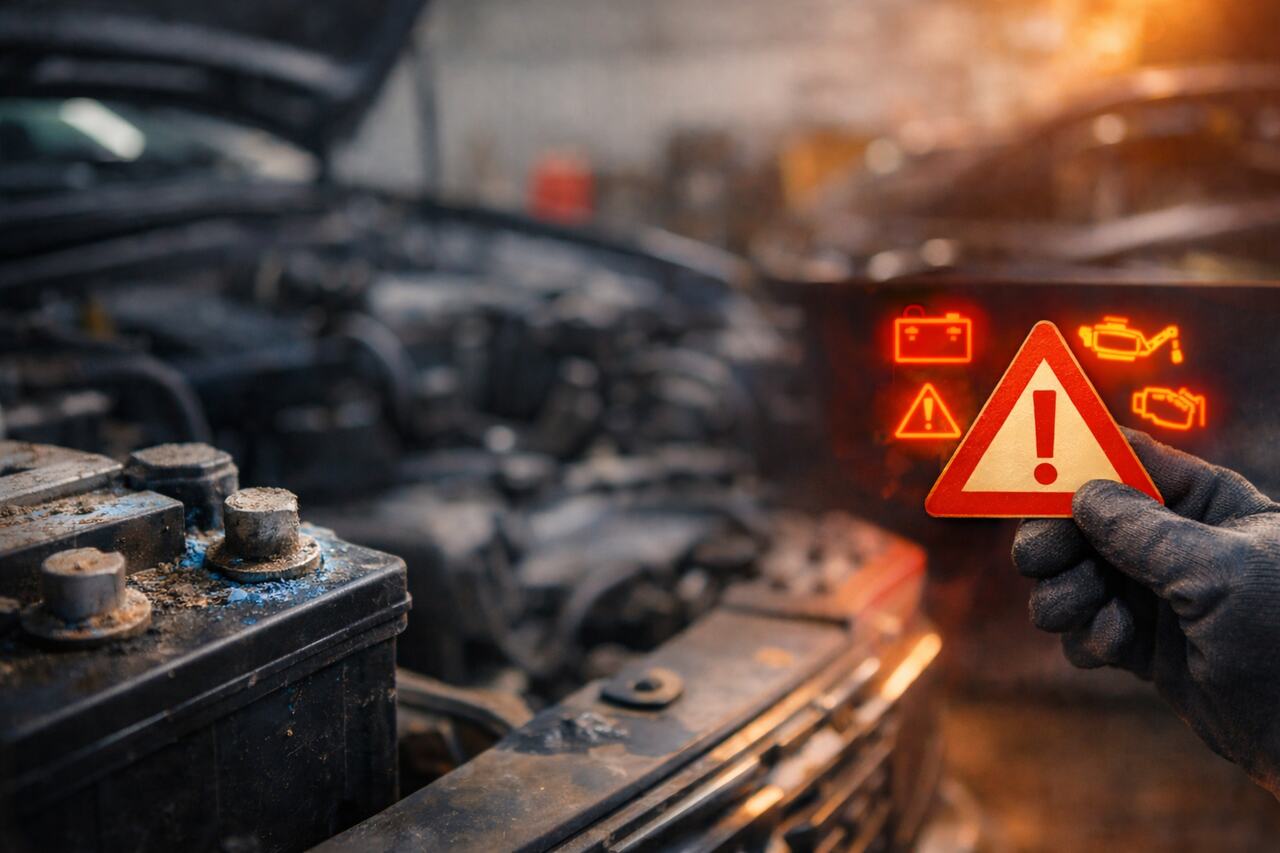
Other warning signs include dim interior lights, flickering electrical behavior, power accessories that seem weaker than usual, dashboard battery warnings, visible corrosion at the terminals, swelling of the battery case, or leakage.
The most important detail is timing. A battery often seems fine until one morning it is not. That is why a pattern matters more than a single strange start. If your battery is three to five years old and you are seeing even mild symptoms, testing it promptly is wiser than waiting for a complete failure in a parking lot, at work, or during a trip.
Common warning signs and what they usually mean
| Sign | Likely meaning |
|---|---|
| Slow engine crank | Reduced starting power, aging battery, or charging issue |
| Battery warning light | Charging system fault or battery-related problem |
| Corroded terminals | Poor connection, possible charging resistance |
| Swollen battery case | Heat damage or internal failure |
| Dim lights with engine off | Weak reserve charge |
| Repeated need for jump-starts | Battery near end of service life or alternator/parasitic drain issue |
These signs do not always prove the battery alone is at fault. A failing alternator, loose connections, or parasitic drain can create similar symptoms. Still, the signs are actionable because they tell you the electrical system needs testing immediately rather than later.
Test the Battery Before Extreme Weather Arrives
Battery testing is one of the easiest ways to avoid getting stranded. A good rule is to test a battery at least twice a year because batteries often fail when weather swings put them under extra stress. A quick load or conductance test can reveal declining health even before starting problems become severe.
The best times to test are before summer heat and before winter cold. Summer accelerates wear, and winter exposes weakness. If your battery is already near the end of the common three-to-five-year range, those seasonal checkpoints become even more important.
Testing also helps separate battery problems from charging system problems. A shop can usually check battery health, charging voltage, starter draw, and connection condition in one visit. That matters because replacing a battery will not solve a failing alternator or a parasitic drain. Good diagnostics prevent wasted money and repeat breakdowns.
Maintain Clean Connections and a Full State of Charge
A battery does not need complicated care, but it does need basic attention. Start with the terminals. Corrosion increases resistance, interferes with charging, and can mimic battery failure. Clean, tight connections allow the charging system to work properly and help deliver full starting current when needed.
State of charge is the next priority. Batteries last longest when kept at or near a full state of charge. That means regular driving, avoiding repeated deep discharge, and using a maintainer if the vehicle sits for long periods. A battery that remains partially discharged ages faster than one that is routinely brought back to full charge.
Physical protection helps too. Parking in a garage or shaded area reduces heat exposure. Securing the battery properly limits vibration, which can damage internal components over time. None of these steps turns a weak battery into a new one, but together they can meaningfully improve service life and reduce the risk of sudden failure.
Replace the Battery at the Right Time Instead of Waiting for a Breakdown
Drivers often ask whether they should replace a battery only after it dies. In most cases, that is the most inconvenient approach. Once a battery reaches the upper part of the normal service window and begins showing symptoms, proactive replacement becomes a practical form of preventive maintenance.
The right timing depends on age, test results, climate, and reliability needs. A three-year-old battery in a very hot climate that tests weak deserves more suspicion than a four-year-old battery in a mild climate that tests strong. Likewise, a family vehicle used for long commutes or late-night travel should be held to a higher reliability standard than a second car that rarely leaves town.
Replacing early is not always necessary, but replacing late can be expensive in hidden ways. Towing, missed work, roadside delays, and the stress of a no-start situation often cost more than a planned battery replacement done on your schedule. The smart goal is not to get every last week out of a battery. The goal is dependable starting when you need it.
Separate 12-Volt Car Battery Life From EV Battery Pack Life
Many readers now use the phrase “car battery” for two different things. In a gasoline car, it usually means the 12-volt starter battery. In an electric vehicle, people may mean either the high-voltage traction battery pack or the smaller 12-volt battery that supports electronics. These are very different systems with very different lifespans.
For EV traction batteries, the expected life is far longer than the three-to-five-year range used for traditional 12-volt batteries. Many manufacturers offer 8-year/100,000-mile warranties, and modern EV batteries can often last much longer under normal use.
That does not mean EV owners can ignore battery aging. Capacity gradually declines over time, and extreme climate still matters. But when someone asks, “How long do car batteries last?” the most common answer for a regular vehicle remains three to five years for the 12-volt battery, while EV main battery packs operate on a much longer time horizon.
Use Simple Habits That Help a Battery Last Longer
The most effective habit is regular driving that gives the charging system time to recover from starts. A battery stays healthier when trips are long enough to replenish the charge used to crank the engine. If most of your driving is only a few minutes at a time, combining errands or taking an occasional longer drive can help.
The second habit is reducing unnecessary drain. Turn off lights, unplug accessories, and avoid using electronics for long periods with the engine off. If the car will sit for weeks, use a battery maintainer rather than letting the battery slowly discharge.
The third habit is seasonal awareness. Test before summer and winter, park out of direct heat when possible, and do not ignore subtle changes in cranking speed. These are small actions, but together they address the exact factors that most often cut battery life short: heat, low charge, and delayed replacement.
Choose a Replacement Battery With Reliability in Mind
When replacement time arrives, buy for fit and reliability rather than for price alone. Use the correct group size, verify the required specifications in your owner’s manual, and select the battery type your vehicle was designed to use.
Warranty matters, but it should not be your only metric. A long warranty can be useful, yet real-world durability depends on climate, charging conditions, and vehicle demand. Also pay attention to the manufacturing date. A battery that sat too long before installation starts life with some age already on it.
If your old battery failed unusually early, ask for a charging-system test before installing the new one. Otherwise, the new battery may be exposed to the same undercharging, overcharging, or parasitic drain problem that killed the last one. A good replacement solves the problem only when the rest of the system is healthy.
Conclusion
So, how long do car batteries last? For most vehicles, the best working answer is three to five years, with around three years in hot climates and five years or more in cooler ones being realistic benchmarks. Heat, short trips, long idle periods, electrical load, and poor charging habits all shorten life, while regular use, clean terminals, seasonal testing, and timely replacement extend it.
The smartest approach is to stop treating the battery like a mystery box. Know its age, watch for slow starts and corrosion, test it before extreme seasons, and replace it before reliability becomes a gamble. When you do that, the question stops being “How long will this battery last?” and becomes “How can I keep my car dependable?” That is the better question, and it leads to fewer roadside surprises.
FAQs
How long does a car battery last on average?
Most car batteries last three to five years under normal conditions, though hot climates often shorten that to around three years and cooler climates may allow five years or more.
Can a car battery last 10 years?
It can happen, but it is not typical. Some batteries do last 10 years or longer, usually when they avoid heat damage, long idle periods, and low-charge conditions.
Does heat or cold damage a car battery more?
Heat usually causes more lasting internal damage, while cold mainly exposes weakness by making the engine harder to start and reducing battery performance.
How do I know my car battery needs replacing?
Common signs include slow cranking, repeated jump-starts, battery warning lights, corrosion, swelling, leakage, and weak electrical performance.
How often should I test my car battery?
Testing at least twice a year is a practical habit, especially before summer and winter.
Do electric car batteries last as long as regular car batteries?
No. A regular 12-volt car battery commonly lasts three to five years, while EV traction batteries are designed for much longer service and often carry 8-year/100,000-mile warranties.
I can also clean up the wording further and make it look more like a publish-ready blog post with no citations, no tables, or a more commercial SEO style.
Read Also: Comparative Reliability Analysis of Toyota and Honda: Maintenance Cost, and Consumer Trust
