
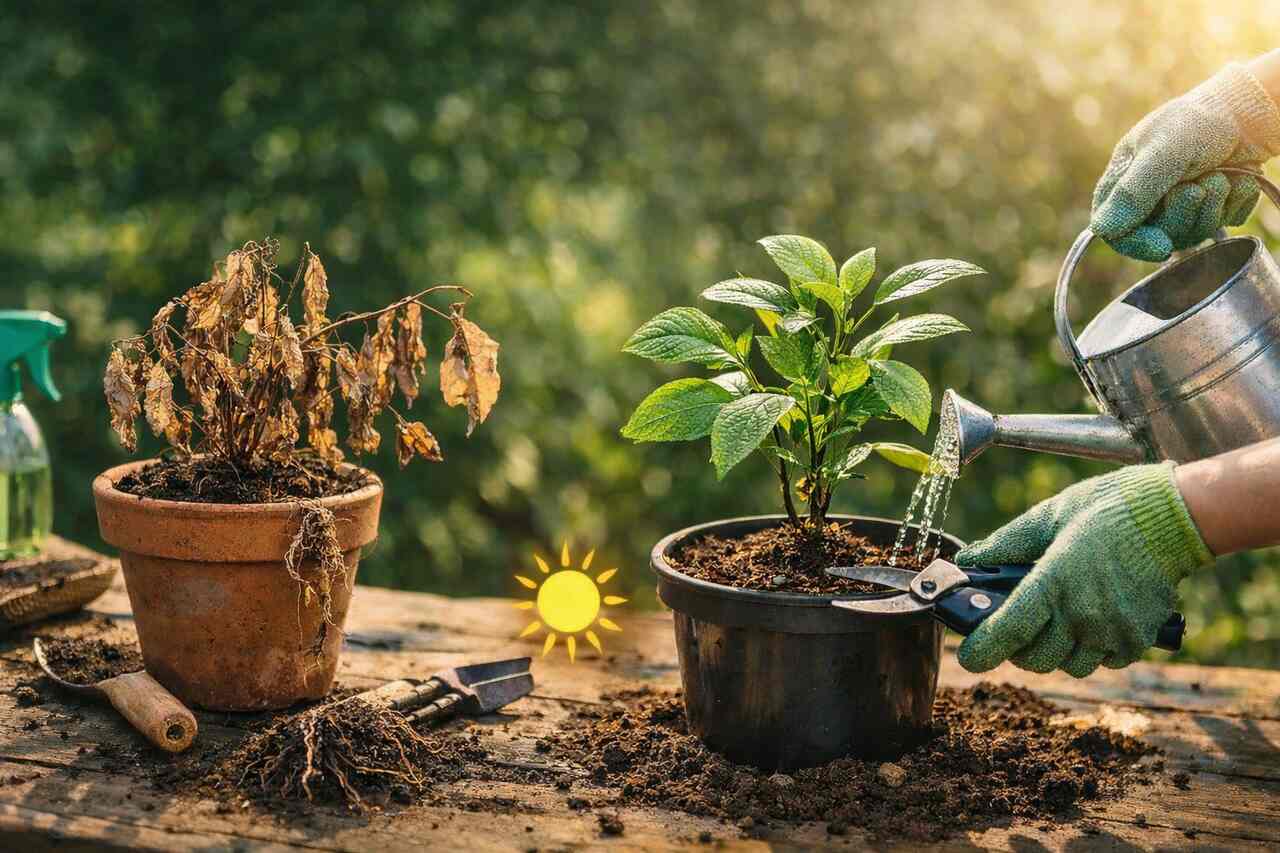
A dead-looking plant can often recover when root damage, watering mistakes, poor light, compacted soil, pests, disease, and environmental stress are identified early and corrected in the right order. Plant revival depends on diagnosis first, stabilization second, and gradual recovery care third.
| Plant Problem | Visible Signs | Likely Cause | Recovery Priority |
|---|---|---|---|
| Dry, crispy leaves | Brown edges, brittle stems, shrinking foliage | Underwatering, heat stress, low humidity | Rehydrate root zone slowly |
| Yellow, soft leaves | Drooping, soggy soil, stem softness | Overwatering, root rot, poor drainage | Dry soil, inspect roots, improve drainage |
| Leaf drop | Bare stems, weak growth, pale foliage | Light stress, temperature shock, transplant stress | Correct light and reduce stress |
| Stunted growth | Small leaves, weak stems, poor vigor | Root binding, nutrient deficiency, compact soil | Repot, refresh soil, feed carefully |
| Black or mushy roots | Foul odor, collapse, persistent wilt | Root rot, fungal damage | Remove diseased roots and repot |
| Pest damage | Spots, webs, sticky residue, curled leaves | Spider mites, aphids, mealybugs, scale | Isolate and treat pests quickly |
Plant revival starts with a simple truth: many plants that appear dead are actually stressed, dormant, dehydrated, or damaged rather than completely lost. Recovery becomes more likely when a gardener examines roots, stems, leaves, soil moisture, drainage, light, and temperature before making changes. A structured approach prevents further shock and gives living tissue a real chance to regrow.
What does “dead plant” really mean?
A plant described as dead usually falls into one of three categories: stressed but alive, partially damaged with living roots, or fully dead with no viable tissue. A correct category matters because treatment only works when living cells remain in roots, stems, crowns, or buds.
Living tissue
Living tissue shows flexibility, moisture, and color under the outer layer. A stem scratch test helps here. A gardener can lightly scrape the outer bark or stem skin with a fingernail. Green tissue under that layer usually signals life. Brown and dry tissue across all stems usually signals severe decline or death.
Root viability
Root viability determines recovery potential more reliably than leaf appearance. Healthy roots look white, cream, or light tan and feel firm. Rotten roots look black, gray, or dark brown and feel mushy. Dry dead roots feel brittle and hollow. A plant with some healthy roots still has a recovery path.
Crown and node condition
Crown tissue and stem nodes often hold the strongest survival potential. Perennials, houseplants, and some shrubs can regrow from a healthy crown even after complete leaf loss. Nodes on vining plants, herbs, and tropical foliage plants may also push new shoots after stress correction.
Dormancy versus death
Dormancy causes many false diagnoses. Deciduous plants, bulbs, some succulents, and seasonal perennials can lose leaves and pause growth naturally. A dormant plant may look lifeless above soil while roots and crown remain active below soil. Seasonal timing, species habit, and stem condition help separate dormancy from actual death.
How can you tell whether a plant still has a chance to recover?
A plant still has a chance to recover when some roots remain firm, some stems remain green inside, the crown stays solid, and new buds or nodes remain intact. Recovery becomes less likely when foul odor, full stem collapse, and fully dry roots appear together.
Stem scratch test
Stem scratching gives a fast answer for woody and semi-woody plants. A fingernail or clean blade can remove a tiny strip from one small section of stem. Green beneath the surface suggests active vascular tissue. Beige, gray, or brown all the way through suggests tissue death in that section.
Bend test
The bend test helps measure stem flexibility. A living stem usually bends slightly before snapping. A dead stem often snaps cleanly and feels brittle. Multiple stem sections should be checked because branch tips can die while lower sections remain alive.
Root inspection
Root inspection gives the strongest signal in potted plants. A gardener can slide the root ball from the container and check color, smell, and texture. Firm pale roots indicate life. Sour odor and mushy texture point toward rot. A few healthy roots among damaged roots can still support recovery after pruning.
Bud and node examination
Bud and node examination reveals latent growth potential. Swollen buds, tiny green points, or firm nodes indicate a living system preparing for regrowth. Flat, shriveled, blackened buds indicate heavy damage. Vines and herbs often recover from lower nodes after upper foliage dies back.
Why do plants appear dead in the first place?
Plants appear dead because stress interrupts water movement, nutrient transport, photosynthesis, respiration, and root function. Visible collapse usually reflects a deeper imbalance in moisture, light, temperature, soil structure, pest pressure, or disease presence.
Overwatering
Overwatering suffocates roots by filling air spaces in soil with excess water. Root cells need oxygen. Oxygen loss triggers decay, fungal growth, and nutrient uptake failure. Leaves then turn yellow, droop, and fall, which many gardeners mistake for thirst and worsen with more watering.
Underwatering
Underwatering reduces cell pressure and shuts down normal growth. Leaves crisp, stems weaken, and roots shrink away from dry soil. Severe dryness can turn potting mix hydrophobic, which means water runs around the root ball instead of soaking into root tissue. A plant can look dead even while a few internal tissues survive.
Light imbalance
Light imbalance includes both too little light and too much harsh sun. Low light reduces photosynthesis, weakens stems, and causes leaf loss. Strong direct sun can scorch foliage, bleach tissue, and overheat roots. Houseplants moved abruptly from dim rooms to bright windows often show fast decline.
Soil and drainage problems
Soil and drainage problems block recovery even when watering appears correct. Heavy soil holds too much water. Sandy soil dries too fast. Old potting mix compacts and loses structure. Poor drainage traps salts and moisture around roots. Root stress then spreads upward through the whole plant.
What should you do first when trying to revive a dead-looking plant?
A gardener should start by pausing all routine care and checking the root zone, stem condition, soil moisture, drainage, light exposure, and pest presence. Random changes create more stress. A calm diagnosis saves time and improves survival odds.
Stop fertilizing
Fertilizer can burn weak roots and increase salt stress during recovery. A damaged plant cannot process nutrients efficiently. Stabilization should come before feeding. Nutrient support becomes useful only after new growth starts and root health improves.
Check soil moisture correctly
A moisture reading should come from below the top layer. A finger, chopstick, or moisture meter can test a few inches down. Surface dryness can hide soggy roots below. Surface moisture can also hide a bone-dry root core in peat-heavy mixes. Accurate moisture assessment prevents the most common mistake.
Remove decorative cachepots and saucers
Decorative containers and full saucers often trap water around the bottom of a nursery pot. That trapped water keeps roots wet for too long. Removing the inner pot and draining excess water allows oxygen to return to the root zone.
Isolate the plant
Isolation protects nearby plants from possible pests or fungal disease. Spider mites, mealybugs, fungus gnats, and bacterial problems can spread quickly in indoor plant groups. Separation also makes monitoring easier because changes become more visible day by day.
How do you revive a plant damaged by overwatering?
An overwatered plant recovers through drying, root inspection, rotten root removal, fresh soil, and corrected watering habits. Speed matters because root rot spreads fast in warm, wet conditions.
Remove the plant from wet soil
Wet compacted soil should not remain around damaged roots for long. A gardener can gently remove the plant from the pot and shake away loose saturated mix. Exposing the root ball allows better assessment and reduces continued oxygen deprivation.
Trim rotten roots
Rotten roots should be cut with sterilized scissors or pruners. Black, mushy, slimy, or foul-smelling roots need removal until only firm tissue remains. Clean cuts reduce infection spread. Sterilized tools matter because contaminated blades can transfer disease.
Repot into fresh, airy mix
Fresh mix should match plant type. Tropical foliage plants usually prefer a loose blend with bark, perlite, and quality potting media. Succulents and cacti need a faster-draining mineral-rich mix. Drainage holes are non-negotiable because roots need water flow and air exchange.
Reset watering intervals
Watering should restart only when the new soil begins to dry at the appropriate depth for that species. Recovery soil should stay evenly moist for moisture-loving plants and more dry between waterings for drought-adapted plants. A schedule based on the calendar causes repeat problems; a schedule based on soil condition works better.
How do you revive a plant damaged by underwatering?
An underwatered plant recovers through gradual rehydration, moisture retention improvement, humidity support when appropriate, and removal of fully dead tissue. Sudden flooding can shock roots and send water past a dry root ball without proper absorption.
Rehydrate slowly
Slow rehydration helps dry roots absorb water again. A pot can be watered in stages until the root ball becomes evenly moist. For severely dry mixes, bottom watering for 20 to 40 minutes often works well because capillary action pulls moisture upward into the root mass.
Break hydrophobic soil
Old dry potting mix can repel water. A chopstick or skewer can gently open small channels through the root ball, helping water move inward. A wetting process may need repetition over several hours for severely shrunken soil.
Raise humidity for tropical species
Tropical foliage plants lose moisture quickly in dry indoor air. Humidity trays, grouped plants, or a humidifier can reduce leaf stress during recovery. High humidity helps foliage hold water, although root hydration still remains the main priority.
Prune dead leaves and tips
Dead foliage no longer contributes to recovery. Removing crisp leaves and dead stem tips improves airflow and redirects energy toward viable tissue. Pruning should remain moderate, because excessive cutting can remove still-living reserves needed for regrowth.
How important are roots in plant recovery?
Roots control water uptake, nutrient absorption, anchorage, and hormone signaling, so root health sits at the center of plant revival. A strong top cannot survive long with failing roots, and a weak top can often recover surprisingly well from a healthy root system.
Water uptake
Water uptake begins at fine feeder roots. Those tiny structures absorb the moisture that supports leaf turgor, nutrient flow, and temperature regulation. Damage to feeder roots often explains why a plant wilts even when soil looks wet.
Oxygen exchange
Oxygen exchange in the root zone keeps respiration active. Roots need oxygen to convert stored energy into growth and repair. Airless soil slows recovery, promotes rot organisms, and reduces root hair formation.
Nutrient absorption
Nutrient absorption depends on active roots and a balanced pH environment. Nitrogen, potassium, magnesium, calcium, and micronutrients move through a functional root system. A damaged root zone can mimic deficiency symptoms even in fertile soil.
Hormonal signaling
Hormonal signaling connects roots with shoots. Healthy roots produce signals that support new leaf growth, branching, and stress recovery. Damaged roots weaken that communication, leading to stalled growth even after surface conditions improve.
| Recovery Area | What to Check | Healthy Sign | Danger Sign | Best Action |
|---|---|---|---|---|
| Roots | Color and texture | White or tan, firm | Black, mushy, smelly | Trim and repot |
| Stems | Inner tissue | Green and moist | Brown and brittle | Prune dead sections |
| Soil | Moisture and structure | Slightly moist, airy | Waterlogged or bone dry | Adjust watering and mix |
| Light | Daily exposure | Species-appropriate brightness | Deep shade or harsh scorch | Move gradually |
| Leaves | Damage pattern | Stable or lightly stressed | Widespread yellowing, crisping, spots | Match care to cause |
| Environment | Temperature and airflow | Stable and moderate | Drafts, heat blasts, cold shock | Relocate plant |
A good recovery plan always connects roots, soil, water, light, and temperature instead of treating leaf symptoms alone. Leaf damage shows the result, while roots and growing conditions reveal the cause. Better diagnosis leads to better survival.
How does light exposure affect plant revival?
Light exposure affects revival by controlling photosynthesis, leaf temperature, growth speed, and stress tolerance. A recovering plant needs enough light to rebuild energy reserves, but weak tissue can suffer under intense direct sun.
Low-light stress
Low-light stress leads to pale leaves, stretched stems, slow drying soil, and weak growth. Recovery in very low light often stalls because the plant cannot produce enough energy. Moving a plant closer to a bright window or adding a grow light can restart growth.
Sunburn and heat scorch
Sunburn causes bleached patches, brown scorch marks, and rapid wilt. Plants moved from dim indoor settings to direct afternoon sun often suffer quickly. Gradual acclimation works better than abrupt exposure. Morning light usually feels gentler during recovery.
Species-specific light needs
Species-specific needs matter. Succulents, citrus, herbs, and many flowering plants need strong light. Ferns, peace lilies, and some tropical understory plants prefer bright indirect light. Correct plant identification prevents repeated trial-and-error mistakes.
Light duration and consistency
Light duration and consistency matter alongside intensity. A plant near a bright window for only one hour may still struggle. Twelve hours of moderate grow light can outperform weak natural light in a dark room. Consistency reduces stress and supports new growth.
What role does soil play in bringing a plant back to life?
Soil supports water balance, root aeration, microbial health, nutrient storage, and structural stability. Poor soil can keep a plant in decline even after watering and light improve, while fresh appropriate soil can create a major turning point in recovery.
Soil texture
Soil texture affects both water retention and oxygen flow. Fine dense particles hold more moisture but may compact easily. Coarser components such as bark, pumice, and perlite improve drainage and root breathing. A balanced texture supports steady recovery.
Organic matter
Organic matter helps hold nutrients and moderate moisture. Compost, coco coir, peat alternatives, and bark components can improve structure depending on the plant type. Excessive decomposition in old media, however, can produce compaction and poor drainage.
Drainage and container choice
Drainage depends on both soil and container design. A plastic pot holds moisture longer. A terracotta pot dries faster because porous clay releases water. The right container helps balance species needs and household conditions such as humidity, temperature, and airflow.
Soil refresh timing
Soil refresh timing matters during rescue. Repotting a mildly stressed plant can sometimes add shock, but badly waterlogged, rotten, or compacted conditions usually justify immediate intervention. Root condition should guide that decision more than leaf appearance alone.
Should you prune a dying plant?
Pruning helps when dead tissue, rot, disease, or collapse drain energy and trap moisture around living sections. Pruning hurts when a gardener removes too much weak but living tissue that still stores energy. Precision matters more than aggression.
Dead stem removal
Dead stem removal improves airflow and makes new growth easier to monitor. A clean cut above healthy tissue prevents decay from spreading downward. Brown hollow stems with no green interior usually offer no recovery value.
Leaf cleanup
Leaf cleanup reduces pest habitat and mold risk. Yellow leaves with some green can still support recovery, so complete removal should depend on severity. Fully brown, blackened, or mushy leaves should go first.
Shaping versus rescue pruning
Shaping and rescue pruning serve different goals. A rescue phase should focus only on dead, diseased, and clearly unsalvageable growth. Cosmetic shaping can wait until strong regrowth appears. A weak plant needs maximum energy reserves.
Tool sanitation
Tool sanitation prevents infection spread. Alcohol or a bleach solution can sanitize blades between cuts, especially when fungal or bacterial issues are suspected. Clean tools create cleaner wounds and lower contamination risk.
How do pests and diseases influence plant recovery?
Pests and diseases weaken plants by stealing sap, damaging roots, disrupting photosynthesis, and opening tissue to infection. A plant cannot recover fully while active infestation or rot continues, so treatment and environmental correction must happen together.
Spider mites
Spider mites thrive in warm dry air and attack leaf undersides. Fine webbing, speckled leaves, and dull foliage often appear first. Washing leaves, improving humidity, and using insecticidal soap or appropriate miticide can reduce populations.
Mealybugs and scale
Mealybugs and scale feed on sap and leave sticky residue. White cottony clusters or brown shell-like bumps often hide in leaf joints and stems. Manual removal, isolation, and repeated treatment are usually necessary because eggs and juveniles can persist.
Fungal root rot
Fungal root rot follows excessive moisture and poor aeration. Soft roots, bad odor, and persistent wilt in wet soil point toward that problem. Root pruning, fresh medium, better drainage, and controlled watering form the core solution.
Leaf spot and stem disease
Leaf spot and stem disease can arise from excess humidity on foliage, poor airflow, or pathogen spread. Infected tissue should be removed promptly. Watering at soil level and improving air circulation often reduce recurrence.
What is the best environment for a recovering plant?
A recovering plant usually needs stable temperature, moderate airflow, species-appropriate light, controlled moisture, and low disturbance. Recovery speeds up when stress factors are reduced instead of stacked on top of each other.
Stable temperature
Stable temperature protects weak roots and tender shoots. Most common houseplants recover best between mild indoor temperatures without sudden day-night swings. Cold drafts from windows and heat blasts from vents can stall progress.
Gentle airflow
Gentle airflow helps prevent fungal issues and keeps leaf surfaces healthier. Strong fan pressure can dry weak foliage too fast, while stagnant air invites pests and disease. Balanced movement works best.
Reduced handling
Reduced handling lowers stress. Constant moving, rotating, repotting, and pruning can interrupt recovery. A plant needs time to adapt after major changes. Monitoring should remain frequent, but physical interference should remain minimal.
Clean surroundings
Clean surroundings reduce pest and disease pressure. Fallen leaves, standing water, dirty saucers, and dusty foliage create problems during recovery. A tidy plant area supports observation and healthier growing conditions.
How long does plant recovery take?
Plant recovery can take days, weeks, or months depending on species, root damage, season, and growing conditions. Fast growers such as pothos or coleus may show change within a week, while woody plants and succulents often need much longer.
Fast signs of improvement
Fast signs include firmer leaves, better stem posture, reduced leaf drop, and stabilized soil drying patterns. A plant does not need immediate new leaves to prove progress. Sometimes the first success simply means decline has stopped.
Medium-term recovery
Medium-term recovery often shows through bud swelling, small leaf emergence, root regrowth, and stronger water use. Soil that dries at a healthier rate usually signals active roots returning. Stem color and leaf texture also improve gradually.
Slow recovery patterns
Slow recovery is common after root rot, cold damage, or severe drought. A patient gardener may need several months before major regrowth appears. Premature disposal often happens when recovery remains invisible below soil but active in roots.
Signs recovery is failing
Failure signs include continued mushiness, spreading black stems, foul smell, total brittleness, and no green tissue anywhere on repeated checks. A fully dead crown with dead roots leaves little room for revival.
What can readers do to prevent future plant decline?
Prevention depends on matching plant type with home conditions, checking soil before watering, using proper containers, and responding early to small stress signals. A revived plant teaches care patterns that can protect the next growing cycle.
Learn species needs
Species knowledge prevents generic care mistakes. A snake plant and a peace lily need very different moisture patterns. A succulent in a dark room and a fern in full sun both struggle for predictable reasons. Correct identification improves every care decision.
Use observation over routine
Observation beats rigid routine. Soil moisture, leaf posture, color, growth rate, and season should guide watering and placement. A fixed weekly schedule ignores humidity, temperature, pot size, and light variation.
Repot before crisis develops
Repotting before crisis develops helps long-term health. Root-bound plants, degraded potting media, and blocked drainage holes push plants toward avoidable decline. Preventive repotting creates room for stable hydration and nutrient flow.
Build a recovery mindset
A recovery mindset helps readers stay calm and systematic. Plant care improves when each symptom is treated as a clue instead of a command to water, fertilize, or prune immediately. Careful diagnosis saves more plants than quick reactions.
Conclusion
Reviving a dead-looking plant depends on one central principle: symptoms above soil rarely tell the whole story below soil. Root condition, moisture balance, drainage, light, temperature, pests, and pruning choices all work together. A plant with green stem tissue, viable roots, or a healthy crown still deserves a structured rescue attempt. A gardener who checks life signs first, corrects the original cause second, and waits patiently for gradual regrowth often saves plants that seemed beyond hope. Better diagnosis leads to better care, and better care leads to stronger future growth.
FAQ
Can a completely brown plant come back?
A completely brown plant can come back only when some inner stem tissue, root tissue, or crown tissue remains alive. A scratch test, bend test, and root inspection give the clearest answer.
How often should a recovering plant be watered?
A recovering plant should be watered according to soil condition and species needs rather than a fixed schedule. Moisture should be checked at root depth before each watering decision.
Should fertilizer be used on a dying plant?
Fertilizer should usually be avoided during the early rescue stage. Weak roots can suffer further damage from salt buildup. Feeding becomes safer after clear signs of new growth appear.
Can root rot be reversed?
Root rot cannot be reversed in roots that have already turned mushy and diseased. Recovery remains possible when rotten roots are removed and healthy roots are protected in fresh fast-draining soil.
Is direct sunlight good for a dying plant?
Direct sunlight helps some species and harms others. Most stressed houseplants recover better in bright indirect light first, followed by gradual adjustment based on species needs.
Should dead leaves be removed?
Dead leaves should be removed because dead tissue can attract pests and disease. Partially damaged leaves can remain when enough green tissue still supports photosynthesis.
How long should a gardener wait before giving up?
A gardener should wait long enough to inspect roots, stems, and crown carefully, then provide stable rescue care for several weeks or longer depending on species and season. Woody plants and succulents often need more time than soft tropical foliage plants.
Read Next: Surviving the Sands: Top Desert Plants and Their Unique Adaptations
