



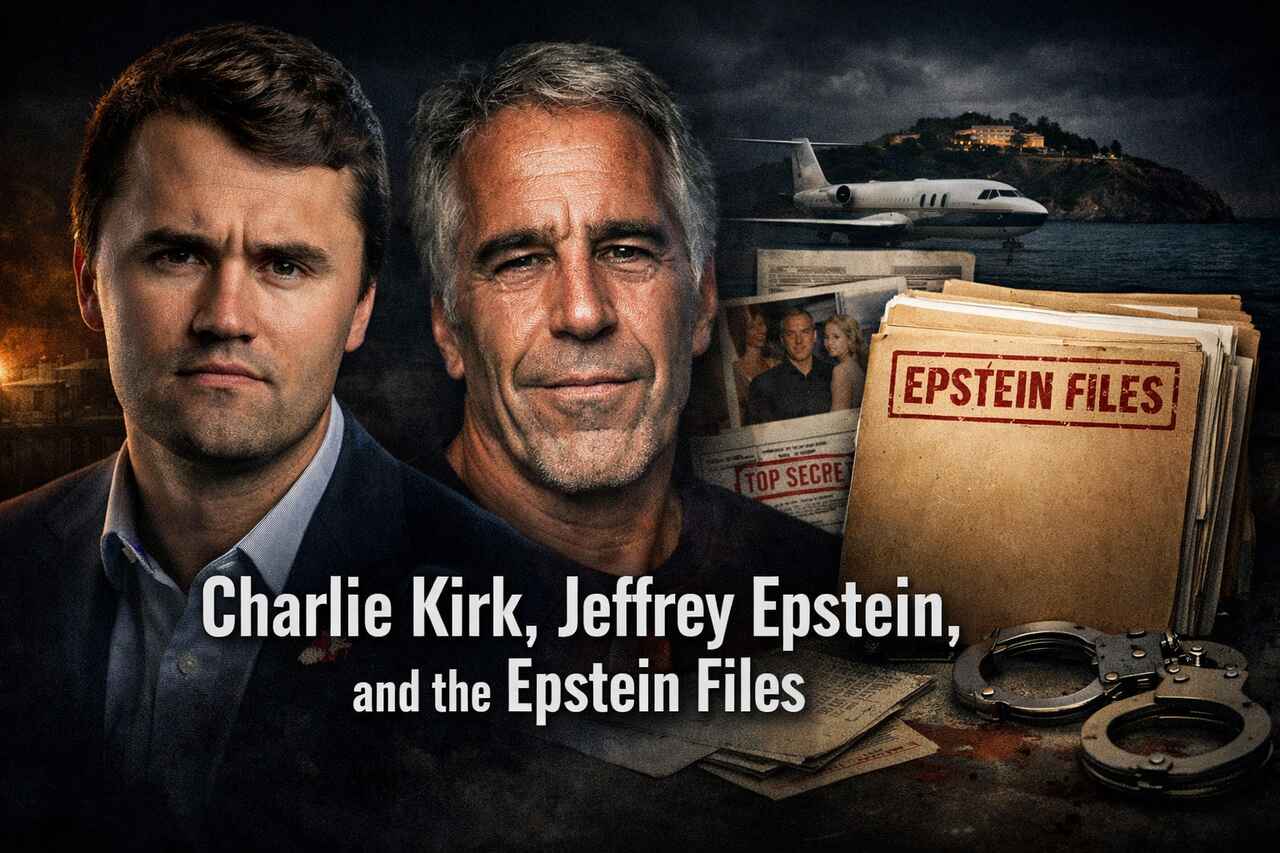
Introduction
Search intent behind “charlie kirk epstein files” reflects a demand for clarity regarding public commentary by Charlie Kirk about the legal records and investigative materials connected to Jeffrey Epstein. Users seek to understand how political activism intersects with criminal investigations, how media framing shapes public perception, and how document disclosures influence civic trust. Public discourse surrounding Epstein’s criminal network continues to evolve as courts, journalists, and commentators analyze sealed files, flight logs, court transcripts, and witness testimonies. Political figures and commentators often reference these materials to argue about institutional accountability, elite networks, and systemic corruption. Clear semantic understanding requires separating legal facts from opinion, distinguishing primary evidence from commentary, and identifying the entities shaping public narratives.
Who Is Charlie Kirk and What Role Does He Play in Political Commentary?
Charlie Kirk functions as a political activist, media personality, and organizational leader within American conservative movements. Public commentary by Kirk often focuses on cultural politics, institutional criticism, and federal governance. References to Epstein-related files appear within broader critiques of elite institutions and political transparency.
Turning Point USA
Turning Point USA operates as a nonprofit organization founded in 2012. The organization promotes conservative values on high school and college campuses.
Turning Point USA organizes conferences such as AmericaFest, hosts campus chapters, and distributes political education materials. Organizational messaging frequently emphasizes free markets, constitutional principles, and limited government. Institutional framing influences how topics like Epstein’s network become embedded in broader narratives about political corruption.
Turning Point USA leverages social media amplification strategies. Amplification strategies increase visibility of investigative controversies, including references to Epstein associates. Audience engagement metrics demonstrate high interaction rates on controversial political subjects.
Funding sources, donor networks, and advisory boards form structural attributes of Turning Point USA. Structural attributes influence public trust and partisan perception. Public debates often connect advocacy organizations to larger ideological ecosystems.
Media Platforms and Podcast Presence
Charlie Kirk hosts “The Charlie Kirk Show,” a political talk platform distributed through radio, podcast streaming services, and digital video channels. Media distribution expands audience reach beyond campus activism.
Podcast episodes frequently discuss federal investigations, judicial proceedings, and cultural controversies. Epstein-related commentary emerges in episodes examining alleged elite protection networks.
Guest interviews include politicians, journalists, and commentators. Interview dynamics shape discourse framing. Framing determines whether Epstein files appear as criminal evidence, institutional scandal, or partisan issue.
Audience demographics skew toward conservative listeners. Demographic alignment affects interpretive context of Epstein discussions.
Political Messaging Strategy
Political messaging by Kirk emphasizes accountability rhetoric. Accountability rhetoric frames Epstein files as symbolic evidence of systemic failure.
Narrative strategy often contrasts “elite insiders” with “ordinary citizens.” Contrast builds populist appeal. Epstein’s associations with high-profile individuals reinforce messaging themes.
Social media clips condense long-form discussions into shareable segments. Segmentation increases virality of statements referencing sealed documents.
Political commentary frequently references transparency demands. Transparency functions as core attribute in discourse around Epstein files.
Public Influence and Criticism
Public influence emerges through speaking tours, online following, and organizational partnerships. Influence increases narrative spread.
Criticism targets perceived partisanship and selective framing. Selective framing raises debate about objectivity.
Academic observers analyze how political commentators shape public understanding of legal proceedings. Legal understanding often depends on secondary commentary rather than primary documents.
Public trust correlates with clarity, factual grounding, and evidence citation. Commentary around Epstein files demonstrates how influence intersects with investigative reporting.
What Are the Epstein Files and Why Do They Matter?
Jeffrey Epstein became the subject of federal investigation for sex trafficking of minors. “Epstein files” refers to collections of court documents, sealed records, depositions, flight logs, contact books, plea agreements, and investigative reports.
Epstein files matter because documentation reveals networks of association, legal decision-making patterns, and institutional responses to allegations. Public access to records influences trust in justice systems.
Court Documents and Indictments
Federal indictments in 2008 and 2019 outline charges related to sexual exploitation and trafficking. Indictment documents describe alleged conduct, timelines, and prosecutorial reasoning.
Court transcripts from proceedings provide verbatim accounts of arguments, witness statements, and judicial rulings. Transcripts serve as primary legal evidence.
Sealed filings contain names of associates or alleged co-conspirators. Sealed status restricts public visibility.
Unsealed releases periodically expand public knowledge. Document releases trigger media cycles and political commentary.
Flight Logs
Flight logs list passengers on Epstein’s private aircraft. Passenger manifests became focal point for public scrutiny.
Log entries record dates, departure locations, and arrival destinations. Metadata provides investigative leads.
Association does not equal wrongdoing. Legal principle distinguishes proximity from criminal participation.
Media reporting often highlights prominent individuals named in logs. Public discourse sometimes conflates presence with culpability.
Contact Books and “Black Book”
Epstein maintained address books containing phone numbers and contact details of politicians, business leaders, academics, and celebrities.
Contact presence indicates social connection. Social connection does not constitute evidence of criminal conduct.
Redactions in released copies obscure certain identities. Redaction decisions influence speculation.
Public fascination stems from perceived elite interconnectedness.
Ghislaine Maxwell Trial Records
Ghislaine Maxwell faced trial for aiding Epstein’s trafficking operation. Trial proceedings produced additional documentation.
Witness testimonies expanded narrative beyond Epstein alone. Testimonies described recruitment patterns and coercion mechanisms.
Verdicts reinforced prosecutorial conclusions regarding trafficking conspiracy.
Legal outcomes influence political narratives about accountability.
Comparative Overview of Epstein File Components
| Component | Primary Function | Public Access Level | Legal Significance |
|---|---|---|---|
| Indictments | Formal criminal charges | Public | Establishes alleged crimes |
| Transcripts | Courtroom dialogue record | Mostly public | Documents legal arguments |
| Flight Logs | Passenger travel record | Partially public | Indicates associations |
| Contact Books | Network directory | Partially redacted | Shows social connections |
| Sealed Filings | Confidential submissions | Restricted | May contain sensitive evidence |
Epstein file components collectively shape understanding of criminal proceedings, institutional oversight, and public accountability debates. Structured differentiation between evidence categories reduces misinformation and clarifies legal interpretation boundaries.
How Do Political Commentators Connect Charlie Kirk to the Epstein Files?
Public discourse often links commentary by Charlie Kirk to broader debates about elite accountability. Association arises through podcast discussions, social media posts, and conference speeches referencing Epstein investigations.
Transparency Demands
Political rhetoric frequently calls for complete unsealing of Epstein-related documents. Transparency demand positions disclosure as mechanism for restoring public trust.
Unsealing debates involve judicial discretion and privacy rights. Courts balance transparency with victim protection.
Commentary frames withheld records as potential evidence of institutional shielding.
Institutional Accountability Narratives
Institutional accountability arguments focus on law enforcement agencies, prosecutorial decisions, and plea agreements.
Critics of the 2008 non-prosecution agreement argue federal oversight failure. Political activists cite agreement as proof of elite privilege.
Narrative framing influences whether discourse centers on legal reform or partisan blame.
Media Framing
Media outlets select angles emphasizing either legal complexity or political scandal. Framing shapes audience perception.
Commentators amplify selected headlines. Amplification intensifies partisan interpretation.
Editorial tone affects public emotion, including outrage or skepticism.
Audience Reception
Audience interpretation depends on prior ideological alignment. Alignment influences acceptance of commentary.
Social media algorithms increase exposure to confirmatory narratives.
Public discourse evolves as new documents emerge.
What Legal and Ethical Considerations Surround the Epstein Files?
Legal processes govern evidence disclosure. Ethical obligations protect victims and ensure due process.
Sealing and Unsealing Procedures
Federal judges determine which filings remain sealed. Judicial orders specify scope of release.
Privacy rights protect victims’ identities. Protective measures include redaction.
Transparency advocates argue for broader disclosure.
Defamation Risks
Publicly naming individuals without proof risks defamation liability. Legal standards require evidence of false statements and reputational harm.
Commentators must distinguish allegation from conviction.
Responsible journalism reduces misinformation spread.
Victim Protection
Victim anonymity preserves safety and dignity. Court systems prioritize trauma-informed procedures.
Public curiosity must not override survivor protection.
Ethical discourse centers accountability while respecting privacy.
How Can Readers Interpret Information About Charlie Kirk and the Epstein Files Responsibly?
Responsible interpretation requires evaluating primary sources, distinguishing commentary from evidence, and recognizing rhetorical framing.
Source Evaluation
Primary sources include court records and official transcripts. Secondary sources include news articles and podcasts.
Verification reduces misinformation.
Contextual Awareness
Political commentators interpret events through ideological lenses. Awareness prevents uncritical acceptance.
Multiple perspectives enrich understanding.
Critical Thinking Practices
Question framing, evidence citation, and narrative intent. Cross-reference claims with documented filings.
Avoid equating association with guilt.
Benefits and Risks of Public Discourse on High-Profile Criminal Files
| Benefit | Description | Risk | Description |
|---|---|---|---|
| Transparency | Promotes institutional accountability | Misinformation | Spreads unverified claims |
| Civic Engagement | Encourages democratic participation | Defamation | Harms reputations |
| Reform Advocacy | Drives legal change | Polarization | Deepens partisan divides |
Public engagement strengthens democracy when grounded in verified evidence. Unchecked speculation weakens civic trust.
Future Scope: How Will the Epstein Files Continue to Influence Political Commentary?
Future document releases may introduce additional names or contextual details. Judicial review processes determine pace of disclosure.
Political commentators will likely continue referencing Epstein as symbol of elite misconduct. Symbolic framing sustains narrative relevance.
Media ecosystems amplify incremental revelations. Incremental updates maintain audience engagement.
Legal reforms addressing trafficking and prosecutorial oversight may emerge from sustained scrutiny.
Conclusion
Charlie Kirk’s commentary intersects with the Epstein files through themes of transparency, institutional accountability, and elite power structures. Epstein files encompass indictments, flight logs, contact books, and trial records, each carrying distinct evidentiary weight. Responsible interpretation requires distinguishing verified legal documents from political rhetoric. Ethical discourse protects victims, prevents defamation, and sustains public trust. Future developments will continue shaping political narratives, legal reform discussions, and media coverage patterns.
FAQ:
What does “Epstein files” include?
Epstein files include indictments, court transcripts, flight logs, contact books, sealed filings, and trial records associated with Jeffrey Epstein’s criminal cases.
Has Charlie Kirk been legally implicated in Epstein’s crimes?
No public court document or indictment has implicated Charlie Kirk in Epstein’s criminal proceedings. Commentary involves political discussion rather than legal accusation.
Why are some Epstein documents sealed?
Courts seal documents to protect victim privacy, ensure due process, and prevent prejudicial exposure before trial conclusions.
Does appearing in flight logs prove criminal involvement?
Flight log appearance indicates travel association. Legal standards require evidence of criminal conduct beyond association.
Why do political commentators reference the Epstein files frequently?
Political commentators use Epstein files to argue about elite accountability, institutional reform, and transparency in government and law enforcement.


