


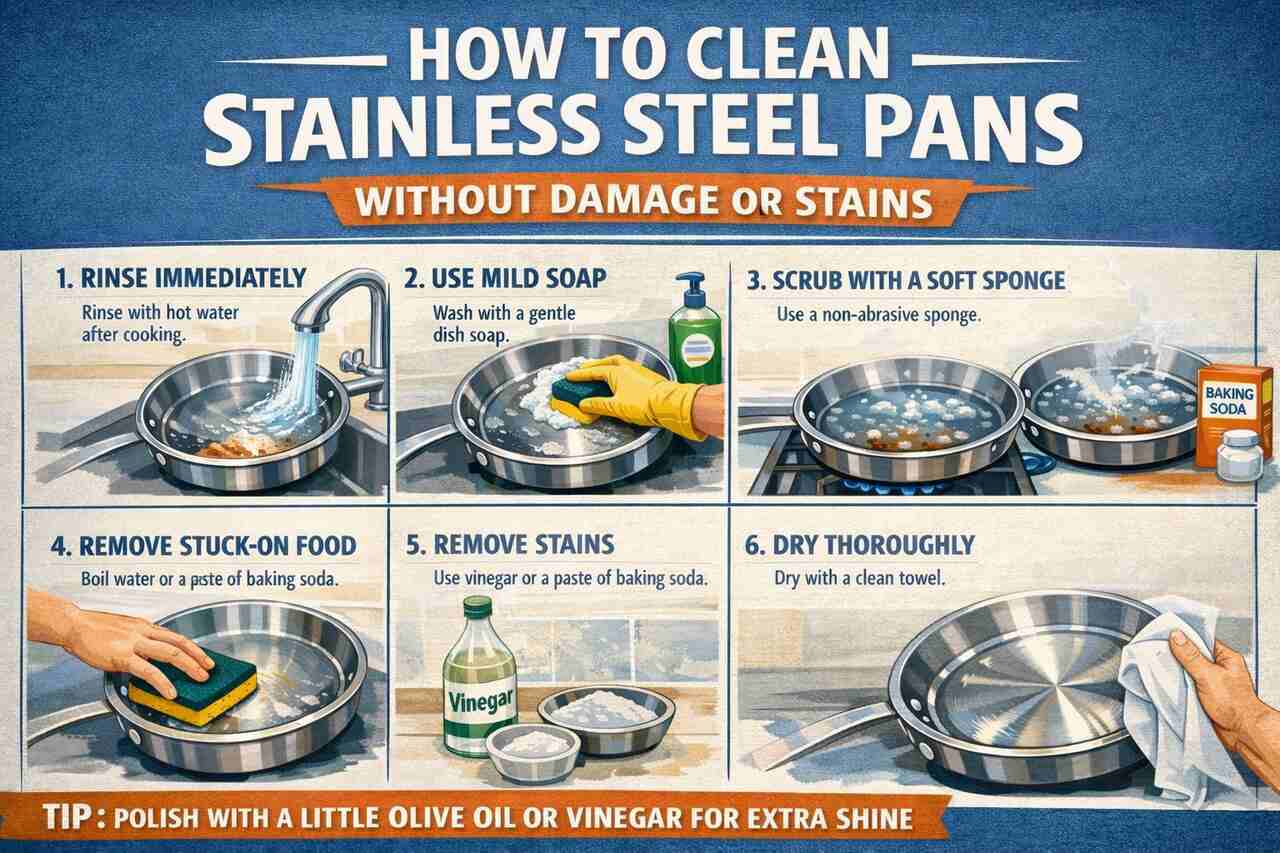
Stainless steel pans are valued for durability, heat responsiveness, and a clean cooking surface, yet they often intimidate home cooks when stains, scorch marks, or rainbow discoloration appear. Learning how to clean stainless steel pans correctly allows you to remove residue without scratching the surface or dulling the finish. With the right techniques, tools, and products, stainless steel cookware can maintain its shine and performance for decades while staying safe for everyday food preparation.
What are the best methods for cleaning stainless steel pans?
The best cleaning methods depend on how dirty the pan is and the type of residue present. Light messes respond well to warm water and pH-neutral dish soap, while tougher stains require targeted solutions like baking soda or specialized stainless steel cleaners. The goal is to lift residue without eroding the chromium oxide layer that protects stainless steel from corrosion.
Effective cleaning combines chemistry and technique. Mild alkalines break down grease, gentle acids dissolve mineral deposits, and non-abrasive friction removes debris safely. Using the correct approach preserves surface smoothness, which directly affects how easily food releases during future cooking.
Consistency also matters. Frequent light cleaning prevents buildup that later requires aggressive scrubbing. Households that clean pans shortly after cooking usually see fewer scorch marks and less discoloration over time.
Can you use vinegar and baking soda on stainless steel?
Vinegar and baking soda are safe for stainless steel when used correctly and separately. White vinegar dissolves mineral deposits and heat tint caused by hard water or overheating. Baking soda works as a gentle abrasive that loosens burnt food without scratching.
The safest method uses one agent at a time. Applying vinegar directly targets rainbow stains or chalky residue, while a baking soda paste handles stuck-on grease. Mixing them creates a neutralizing reaction that reduces effectiveness, so sequential use delivers better results.
These ingredients appeal to households seeking residue-free and eco-friendly options. Both rinse cleanly with water and leave no harmful film, making them suitable for cookware used daily.
How does Bar Keepers Friend work for stainless steel cleaning?
Bar Keepers Friend cleans stainless steel through oxalic acid, which binds to iron oxide and mineral stains without damaging the metal surface. This chemical action lifts discoloration, scorch marks, and stubborn residue more efficiently than general dish soap.
The powdered cleanser pairs best with a damp non-scratch sponge. Gentle circular motion activates the cleanser while maintaining control over abrasion. Immediate rinsing prevents residue buildup and ensures a bright finish.
Professional kitchens often rely on this cleaner because it restores shine quickly. When used occasionally rather than daily, it complements gentler maintenance routines and extends cookware lifespan.
Are natural cleaners effective on burnt pans?
Natural cleaners like baking soda, vinegar, lemon juice, and citric acid are effective on burnt stainless steel pans when heat damage is moderate. These substances interact with grease and mineral deposits rather than scraping them away.
Effectiveness improves with heat and time. Allowing solutions to simmer or soak gives chemical reactions time to loosen residue. This reduces physical effort and minimizes surface wear.
For extreme charring, natural methods may require repetition. While slower than commercial cleaners, they provide a safe alternative for households avoiding synthetic chemicals.
How do you remove burnt food from stainless steel pans?

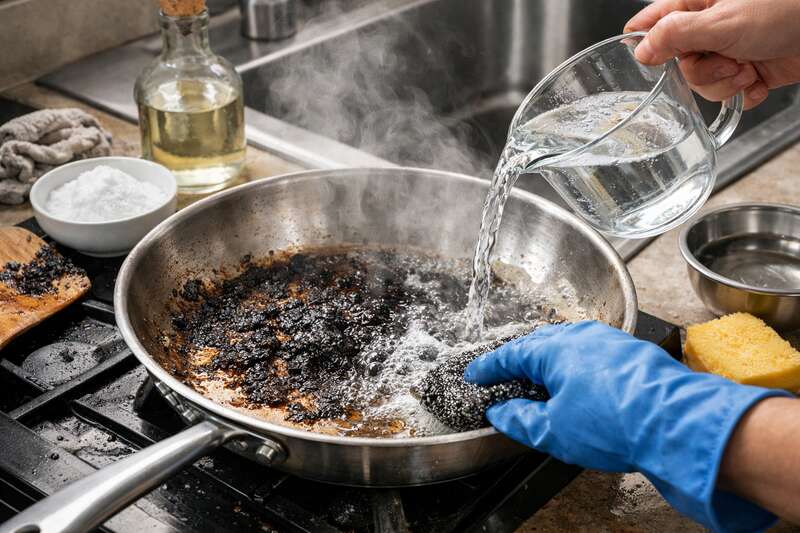
Removing burnt food starts with rehydrating residue. Dry, carbonized food bonds tightly to steel, but moisture and heat weaken this bond. The fastest results come from boiling water combined with mild cleaners that penetrate residue layers.
Avoid scraping dry pans. Hard tools create micro-scratches that trap future food particles. A moisture-based approach preserves surface integrity and simplifies cleanup.
The degree of burning determines whether a quick boil or extended soak works best. Light scorching releases quickly, while thick layers benefit from longer treatment.
What’s the boiling water and baking soda method?
The boiling water and baking soda method uses heat to soften residue and alkalinity to break down grease. Fill the pan with water, add a tablespoon of baking soda, and bring it to a gentle boil for several minutes.
As the solution simmers, residue lifts from the surface and floats upward. After cooling slightly, a non-abrasive sponge removes loosened debris with minimal effort.
This method works especially well for pans with a uniform burnt layer across the base. It avoids harsh scrubbing and restores a smooth cooking surface.
Is soaking overnight effective?
Overnight soaking is effective for thick, stubborn residue that resists quick treatments. Warm water combined with dish soap or baking soda gradually penetrates burnt layers and weakens adhesion.
Soaking works best when residue is fully submerged. Covering the pan prevents evaporation and maintains contact between solution and residue.
This low-effort method suits busy households. While slower, it minimizes physical scrubbing and reduces the risk of surface damage.
How to clean with minimal scrubbing?
Minimal scrubbing relies on chemistry rather than force. Using heated solutions, targeted cleaners, and sufficient dwell time allows residue to detach naturally.
Wooden spatulas help lift softened food without scratching. Microfiber cloths provide controlled friction for final polishing after residue removal.
This approach benefits both cookware longevity and user comfort, especially for those cleaning frequently.
Why do stainless steel pans discolor?
Discoloration occurs when stainless steel is exposed to high heat, minerals, or chemical residues. These conditions alter surface oxides or deposit compounds that reflect light differently, creating blue, rainbow, or brown tints.
Discoloration does not mean the pan is ruined. The structural integrity remains intact, and stains are usually cosmetic. Proper cleaning restores appearance without affecting performance.
Understanding the cause determines the correct treatment. Heat tint differs from mineral buildup, and each responds to different cleaners.
What causes rainbow stains or blue tints?
Rainbow stains result from heat tint, which forms when chromium oxides thicken unevenly under high temperatures. This optical effect changes light reflection but does not weaken the metal.
High heat without sufficient oil or food often triggers this discoloration. Rapid cooling after intense heating can also contribute.
Mild acids like vinegar or citric acid dissolve the oxide layer enough to restore uniform appearance without harming the steel.
Is heat discoloration harmful?
Heat discoloration is cosmetic rather than structural. The pan remains safe for cooking and retains its non-reactive properties.
Repeated overheating can, however, increase sticking over time by altering surface smoothness. Addressing discoloration promptly helps maintain optimal cooking behavior.
Routine temperature control during cooking reduces recurrence and preserves surface consistency.
How to restore shine without damage?
Restoring shine requires gentle polishing after stain removal. Microfiber cloths paired with stainless steel polish or diluted vinegar bring back luster.
Polishing along the grain of the steel avoids swirl marks and maintains factory finish appearance.
Regular light polishing prevents buildup and keeps pans visually appealing with minimal effort.
What are the dos and don’ts of stainless steel pan care?
Proper care balances effective cleaning with surface protection. Gentle tools and appropriate cleaners maintain performance, while harsh abrasives accelerate wear.
Understanding what to avoid prevents irreversible damage. Many issues arise from well-intentioned but harmful practices.
Consistent care routines reduce the need for aggressive cleaning methods later.
Can you use steel wool or abrasive pads?
Steel wool and abrasive pads scratch stainless steel surfaces. These scratches trap food particles and increase sticking during cooking.
Non-scratch sponges provide sufficient friction for routine cleaning without compromising surface integrity.
For stubborn stains, chemical action should replace mechanical force.
Should you clean them in a dishwasher?
Most stainless steel pans are technically dishwasher-safe, but frequent machine washing accelerates dulling due to harsh detergents and high temperatures.
Hand washing with mild soap preserves shine and prevents detergent residue from baking onto surfaces.
Occasional dishwasher use is acceptable, but manual cleaning remains the best long-term option.
What kind of sponges or brushes are safest?
Non-abrasive sponges, silicone brushes, and microfiber cloths are safest for stainless steel. These tools remove residue while maintaining surface smoothness.
Natural bristle brushes work well for textured residue after soaking. Avoid metal bristles entirely.
Tool choice directly influences cookware lifespan and ease of future cleaning.
What are the best products for cleaning stainless steel pans?
The best products combine effectiveness with surface safety. Options range from everyday dish soap to specialized stainless steel cleaners designed for discoloration and heavy residue.
Product selection depends on cleaning frequency and stain severity. Light maintenance requires minimal products, while deep cleaning benefits from specialized formulas.
Eco-conscious households can choose plant-based or mineral-based cleaners without sacrificing performance.
How do commercial cleaners compare to DIY methods?
Commercial cleaners act faster and target specific stains more efficiently. DIY methods offer flexibility and lower cost with slightly longer treatment times.
Both approaches can coexist in a cleaning routine. DIY solutions handle routine messes, while commercial products address periodic deep cleaning.
Performance differences narrow when DIY methods are applied correctly with adequate dwell time.
Are there eco-friendly stainless steel cleaners?
Eco-friendly cleaners use biodegradable surfactants, citric acid, or mineral abrasives. These formulas clean effectively while minimizing environmental impact.
Such products appeal to households prioritizing sustainability without compromising hygiene.
Certification labels help identify cleaners meeting environmental and safety standards.
What’s the safest choice for everyday cleaning?
For everyday cleaning, warm water and pH-neutral dish soap provide the safest and most consistent results. This combination removes grease without leaving residue or dulling the finish.
Paired with a soft sponge, it preserves surface integrity and reduces the need for stronger cleaners later.
Daily gentle cleaning forms the foundation of long-term cookware care.
How to prevent staining and buildup on stainless steel pans?
Prevention reduces cleaning effort and extends cookware lifespan. Proper cooking technique, timely cleaning, and careful storage all contribute.
Stainless steel responds well to preventative habits that minimize food adhesion and residue formation.
Small adjustments during cooking produce noticeable long-term benefits.
Should you season your stainless steel pan?
Seasoning stainless steel creates a thin oil layer that fills microscopic pores, reducing sticking. While not mandatory, seasoning improves cooking performance.
Heating oil until it polymerizes forms a semi-nonstick surface that simplifies cleanup.
Occasional seasoning complements proper cleaning and enhances user experience.
What’s the best way to cook without sticking?
Preheating the pan and using sufficient oil prevents sticking. Stainless steel releases food naturally once a proper sear forms.
Adding food too early causes adhesion. Waiting until the pan reaches the correct temperature improves results.
Cooking technique directly affects post-meal cleaning effort.
How to store stainless steel pans to prevent damage?
Storing pans with protective liners or cloth prevents scratches from stacking. Hanging storage also reduces surface contact.
Drying pans thoroughly before storage prevents mineral deposits from hard water.
Proper storage preserves both appearance and cooking performance.
Conclusion
Learning how to clean stainless steel pans effectively transforms cookware maintenance from a chore into a simple routine. By matching cleaning methods to residue type, using gentle tools, and adopting preventative habits, stainless steel pans retain their shine, performance, and safety for years. Whether relying on natural cleaners or specialized products, consistent care protects the surface and enhances everyday cooking results.
FAQs
Can I use bleach on stainless steel pans?
Bleach can damage stainless steel and cause pitting. It is best avoided in cookware cleaning.
What causes brown or black stains on stainless steel?
These stains usually result from burnt oil or food residue exposed to high heat.
How often should I deep clean my pans?
Deep cleaning once every few weeks is sufficient for regular home use.
Are dishwasher pods safe for stainless steel cookware?
Occasional use is safe, but frequent exposure can dull the finish.
Can lemon juice damage stainless steel surfaces?
Short contact is safe and effective for stains, but prolonged exposure should be avoided.
What’s the best method for stuck-on grease?
Baking soda combined with heat loosens grease effectively without scratching.
How do I remove white calcium deposits from my pans?
Vinegar dissolves calcium deposits quickly and restores surface clarity.
Do professional chefs clean stainless steel differently?
Professional kitchens emphasize immediate cleaning, gentle tools, and periodic deep cleaning for optimal performance.